Three Thousand Graves in a Green Field: Birka
GeisTrack Editorial · 31 July 2026 · 6 min read
Sweden's very first town sat on an island in Lake Mälaren. Today, you'll find a peaceful meadow, a quiet harbour, and an ancient burial mound that completely changed how we understand Viking history.
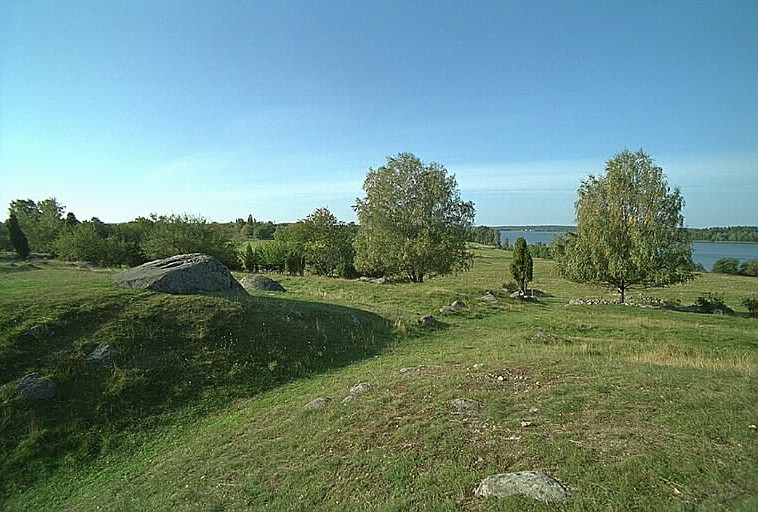
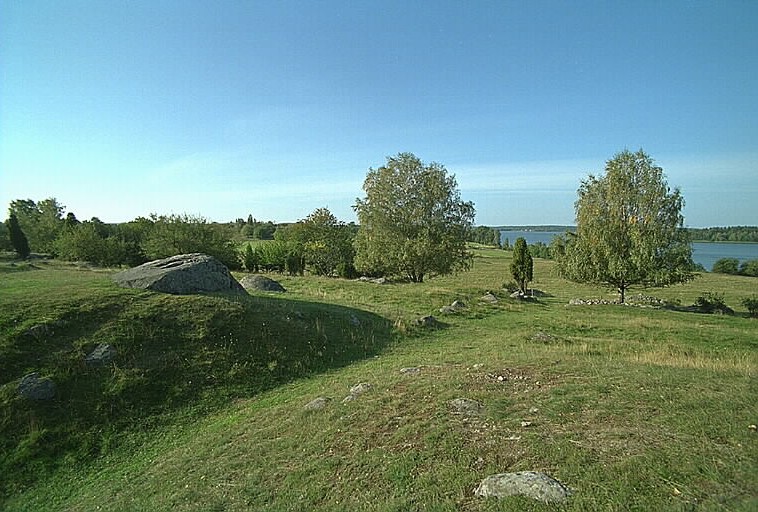
As you take the boat out from Stockholm, Birka doesn't immediately grab your attention. You won't see a rebuilt Viking longhouse skyline or grand ruins reaching for the sky. Instead, you'll find an island, a simple dock, grazing sheep, and a gentle green slope. Once someone points it out, you'll realize this slope is home to over three thousand ancient burial mounds.
This very slope is why archaeologists have debated Birka for 150 years. Founded around 750 AD on the island of Björkö in Lake Mälaren, this was Sweden's first town. It served as a busy trading port where valuable goods like furs, iron, and even enslaved people from the north were exchanged. In return, traders brought silk from China, beautiful glass from the Rhineland region of Germany, and silver coins, called dirhams, from as far away as Baghdad and Samarkand in the Middle East. Thousands of these ancient coins have been unearthed here. While Vikings are famous as fierce raiders, Birka shows us their other important role as skilled merchants and a hub for international trade.
Then there's grave Bj 581. When archaeologists excavated it in 1878, it seemed like the perfect example of a warrior's burial. Inside, they found a sword, an axe, a spear, arrows designed to pierce armor, the remains of two horses, and even gaming pieces. These gaming pieces suggested the person wasn't just a fighter, but a commander who planned battles. For more than a century, every history book assumed the person buried there was a man. But in 2017, DNA analysis by researchers from Stockholm and Uppsala universities confirmed that the skeleton was biologically female. The debate that followed was intense and is still ongoing today, which makes standing by that mound a truly thought-provoking experience.
Visiting Birka itself is a calm and wonderfully pleasant experience. The boat trip from Stadshuskajen in central Stockholm takes just under two hours, and the journey through the beautiful Mälaren archipelago is a delight in itself. Once on the island, you'll discover a small but excellent museum, a reconstructed Viking-age farmstead where staff demonstrate ancient crafts like working with iron and wool, and a guided walk across the burial field, all included with your ticket. Don't forget to climb to the old hillfort; it offers the same commanding views the ancient harbour master would have had. Bring a picnic and relax in the grass; this entire place is a UNESCO World Heritage site, and it feels like a perfect Sunday outing.
Plan your visit between May and September, as that's when the boats operate. Try to catch an early departure and stay until the very last boat leaves. Most day-trippers head back after about ninety minutes, but staying longer lets you enjoy the peaceful quiet hour when the field becomes wonderfully empty.
You might come to Birka expecting stories of Vikings, but you'll leave thinking about ancient trade routes, sparkling silver, and a remarkable woman buried with two horses and a full commander's kit, whose name, sadly, history never recorded.
Plan the trip
Book this journey
We may earn a commission from these partner links, at no extra cost to you.
Visit the place
Practical details, mystery rating and how to plan the trip.