Birka
Björkö, Uppland, SwedenViking Age
Mystery rating
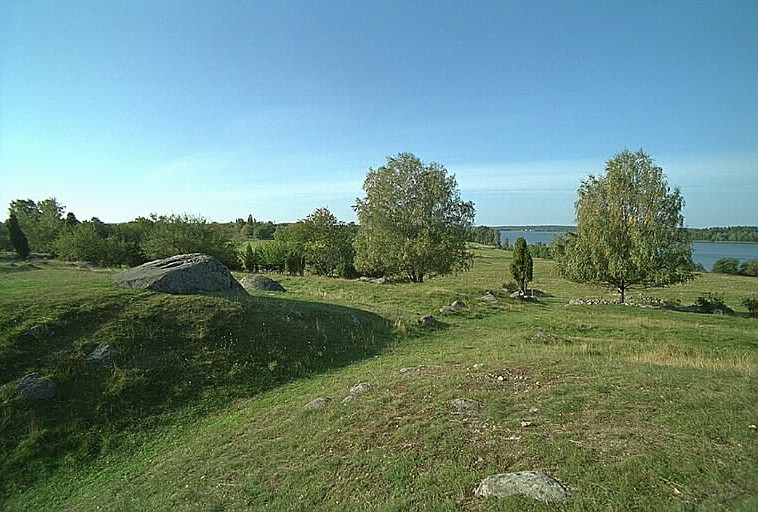
Birka sits on the island of Björkö in Lake Mälaren, west of Stockholm. Over a thousand years ago it was one of the biggest trading towns in the Viking world. Today it is grass, low mounds and a museum, with more than 3,000 graves under your feet. It is on the UNESCO World Heritage list.
Why GeisTrack picked it
Few Viking sites let you walk across the actual ground where the events happened rather than a reconstruction. Birka's grave field, harbor soil, and fortress rock are original, and the Bj 581 controversy gives GeisTrack readers a real scientific mystery rather than an invented one, tied to a place they can physically visit by boat.
Why it's famous
Birka turns the Viking Age from folklore into physical evidence. Founded around 750 AD, it operated as a trading hub for about two centuries, exchanging furs and iron for Arab silver, Byzantine silk, and Rhineland glass. Then its population left, most likely because the land had risen enough to make the shipping channel too shallow. What survived is close to 3,000 graves, one of the largest burial fields from the period anywhere in Europe. The best-known is Bj 581, excavated in 1878 and long described as a male warrior's tomb. DNA testing in 2017 showed the skeleton was female, reopening debate about women's roles in Viking-era combat. Birka and neighbouring Hovgården were named a UNESCO World Heritage Site in 1993, and because no later town was ever built on top of it, the original layout remains largely intact.
History
Birka was founded around the year 750 AD on the island of Björkö. It was perfectly placed on a major water route between the Baltic Sea and the heart of Sweden. Back then, Lake Mälaren was still connected to the sea. At its busiest, between 700 to 1,000 people lived within its protective walls. These were traders, blacksmiths, and artisans, all living and working in a busy layout of shops right along the harbor. Birka’s trading connections were truly global. Archaeologists have dug up graves containing thousands of silver coins (called dirhams) from the Abbasid Caliphate in the Middle East, silk from China, swords from the Frankish Empire in what is now France and Germany, and glass from the Rhineland region. In 829, a Christian missionary from the Frankish Empire named Ansgar visited Birka and started Sweden's very first Christian community. His visit was written down in a book called Rimbert's Vita Ansgarii, which is the oldest written description we have of any place in Sweden. Around the year 975 AD, people left Birka. Most likely, the land was slowly rising after the last ice age, which caused the shipping channel to become too shallow. At the same time, trade started moving to new towns like Sigtuna and to the island of Gotland. The good news is that nobody ever built anything new over the old settlement. This twist of history is why Birka today is a quiet meadow instead of a modern town, and it's also why archaeologists have been able to explore it for over 150 years.
The full story
The best way to reach Birka is just like the Vikings did – by water. During the summer, boats leave from Stockholm's Stadshuskajen. The two-hour journey across Lake Mälaren is beautiful, as you weave through wooded islands until Birka's island, Björkö, appears. It's low, green, and feels wonderfully untouched. When you arrive, you'll be right next to the Birka Museum. It's small but excellent, and it’s a great idea to explore it first. Inside, you’ll find detailed models of the old town, recreated workshops, and fascinating artifacts. Seeing a coin from Baghdad placed next to a Nordic bone comb really brings those ancient trade routes to life. After the museum, step out onto what's known as the "Black Earth." This is the dark, rich soil of the old harbor town, packed with archaeological treasures. From there, you can walk through the grave field, where burial mounds spread out in every direction. Don't worry about getting lost; guided walks in English are available and usually included with your boat ticket, timed perfectly with the boat schedule. Make sure to climb Borgberget, the fortress rock. From the top, you get an incredible panoramic view: the ancient ramparts, the peaceful harbor bay, the sprawling grave field, and the shipping channel that once carried silver all the way from distant lands to this Swedish island. Below, there's a recreated Viking-age farmstead where craftspeople show off skills like weaving, metal forging, and making glass beads. Kids often enjoy these hands-on demonstrations even more than the museum! Remember to pack a picnic or grab a bite at the island café. Wear shoes that can handle wet grass, and keep an eye on the time for your return boat – it's the only way off Björkö. The entire trip from Stockholm takes about seven hours. It offers something truly special: a Viking site where nothing has been built over the original remains, allowing the landscape itself to tell its ancient story.
Legends & sightings
Birka's most intriguing mystery isn't a ghost story, but the tale of a specific grave. Grave Bj 581, uncovered in 1878, contained a warrior buried with a sword, axe, spear, armor-piercing arrows, two horses, and a set of gaming pieces. For over a hundred years, everyone assumed this was the perfect example of a male Viking commander. However, in 2017, genetic testing showed two X chromosomes, sparking a big debate about the role of women in Viking warfare that continues to this day. Older local tales also cling to the island. Some say that the Black Earth glows softly on midsummer nights. For a long time, locals believed that the impressive fortress rock, Borgberget, still watched over ships that no longer sailed by. Even Ansgar's mission left its own folklore; people claimed that the first Christian cross in Sweden stood on Birka's shore, and that the sound of it being raised echoed across the entire lake.
Fact or legend?
Documented: Birka was a real trading town from about 750 to 975 AD. Excavations have found goods from the Middle East and Asia, and thousands of graves. One famous grave, Bj 581, was long assumed to belong to a male warrior. DNA testing published in 2017 showed the person was biologically female. Debated: researchers still argue about what that grave means and why the town was abandoned. Shifting trade routes and falling water levels are the leading ideas. Legend: little of Birka is legend. Most of what is said about it comes out of the ground.
Field notes
- Birka is generally considered Sweden's first town, founded around AD 750.
- Around 3,000 burial mounds and graves survive on the island, of which only a fraction have been excavated.
- Thousands of Arabic silver dirhams found here prove direct trade links with the Abbasid Caliphate.
- Grave Bj 581, long presented as a male warrior chieftain, was shown by DNA analysis in 2017 to be a woman.
- The missionary Ansgar founded Sweden's first Christian congregation at Birka in AD 829.
- Birka and neighbouring Hovgården were inscribed together as a UNESCO World Heritage Site in 1993.
Our verdict
GeisTrack Verdict
Birka rewards travellers who like their history unvarnished. There's no dramatic reconstruction here, just a green meadow, a fortress rock, and thousands of grave mounds that archaeologists are still excavating after 150 years. The museum is small but well curated, and the boat trip from Stockholm is part of the appeal rather than a chore. This isn't a thrill-a-minute stop, and families expecting theatrics may find it slow. But for anyone interested in trade history, archaeology, or the genuine debate sparked by Bj 581, it's one of the most honest Viking sites in Scandinavia. Go for the science, not spectacle.
Editorial assessment based on research, not a sponsored review. See our editorial policy.
Can you visit?
Yes, in season. Björkö is an island and the normal way in is the tourist boat from Stockholm, which usually runs from spring to early autumn. The museum and guided walks operate in the same season. Outside those months there is very little service, so check the timetable before planning a trip.
How to get there
Stockholm is the base. 1. Fly into Stockholm Arlanda (ARN) and take the train or bus into the city. 2. From central Stockholm, take the Birka boat from Stadshusbron by the City Hall. 3. The crossing across Lake Mälaren takes roughly two hours each way. The ticket usually includes the boat, entry and a guided walk. It is a full day out.
Before you go
Check the sailing season and timetable first. Boats do not run all year. Book ahead in summer. Bring a jacket. It is open and windy on the island and on deck. Wear shoes you can walk in on grass and gentle slopes. There is a café, but bringing water and a snack is sensible.
Travel tips
If you're visiting in July or August, make sure to book your boat tickets in advance. When you arrive, it's a good idea to take the guided walk first, and then you can explore the grave field on your own before your boat leaves. The meadow can be wet, so wear waterproof shoes, and bring a windproof jacket for the boat journey across the lake. For the best views and photographs, climb Borgberget late in the afternoon to catch the beautiful light over the harbor bay.
Safety
Be aware that the ground across the burial field is uneven in places. Please note that boats do not operate in the winter months.
What to expect
You step off the boat into open meadow. A guide usually walks you over the old town area and up to the hill fort, where you can see the whole lake. The museum has finds and models that make the empty field make sense. You have a few hours before the boat leaves again, which is enough to see everything without rushing.
Visit with respect
You are walking on a burial ground. Stay on the paths, do not dig, and do not use metal detectors, which are illegal here.
Frequently asked
Plan your trip
Book the practical parts of the journey. We may earn a commission from these partner links, at no extra cost to you.
Plan your visit
Getting to Birka
Everything you need to turn this mystery into a trip. We may earn a commission from these partner links, at no extra cost to you.
- Best time to visit
- The best time to visit is from May to September, which is when the boats run from Stockholm.
- Opening hours
- Museum and site open May to September
- Entrance fee
- Approx. SEK 470 including return boat
Continue your GeisTrack
Other places on GeisTrack that pair well with Birka — same kind of story, or the same corner of the map.
Make it a route
Pair Birka with the Viking sites around Stockholm and Uppsala for a two or three day Viking route.
United Kingdom
Lindisfarne
Lindisfarne, or Holy Island, lies off the coast of Northumberland in England. A road across the sand connects it to the mainland, but the sea covers that road twice a day. In 793 AD Viking raiders attacked the monastery here, an event that shocked Christian Europe and is often used to mark the start of the Viking Age.
Norway
Norwegian Maritime Museum
The Norwegian Maritime Museum sits on the Bygdøy peninsula in Oslo, surrounded by other polar and ship museums. It tells the story of a country shaped entirely by the sea: fishing, shipwrecks, polar voyages and the boats that made them possible.
Or browse every viking heritage entry, or open the interactive atlas.
Read the story
Long-form journal writing about Birka.
Destination Stories
Three Thousand Graves in a Green Field: Birka
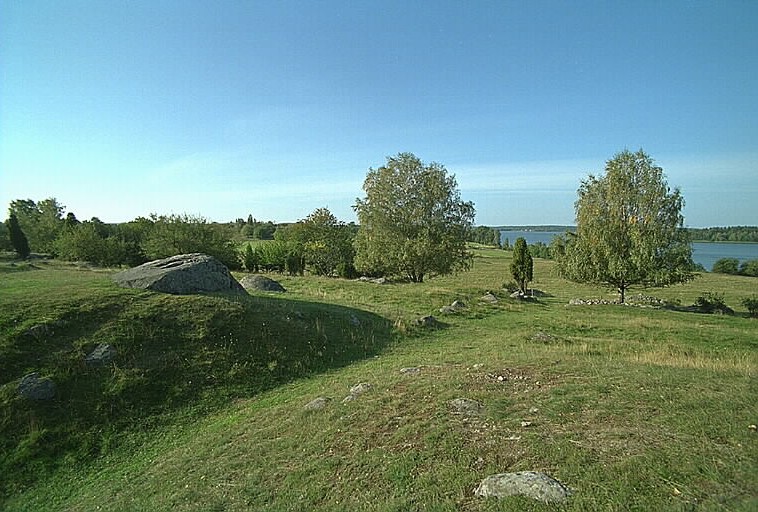
Sweden's very first town sat on an island in Lake Mälaren. Today, you'll find a peaceful meadow, a quiet harbour, and an ancient burial mound that completely changed how we understand Viking history.
31 July 2026 · 6 min read
Travel Guides
The Viking Trail: Nine Days Across Scandinavia
Journey through the ancient Norse world, from the burial grounds of Birka to Lindisfarne's tidal causeway.
21 July 2026 · 11 min read
Rate This Destination
What do you think of this destination? Share your rating with the GeisTrack community.
Community Rating
No ratings yet. Be the first to rate this destination.
Visitor opinion only — separate from the GeisTrack editorial mystery ratings above.
Been here? Share your experience
Have you visited this place? Tell other GeisTrack travelers what it was really like. Your experience may help someone plan their own visit.
No comments yet
No traveler comments yet. Be the first to share your thoughts.