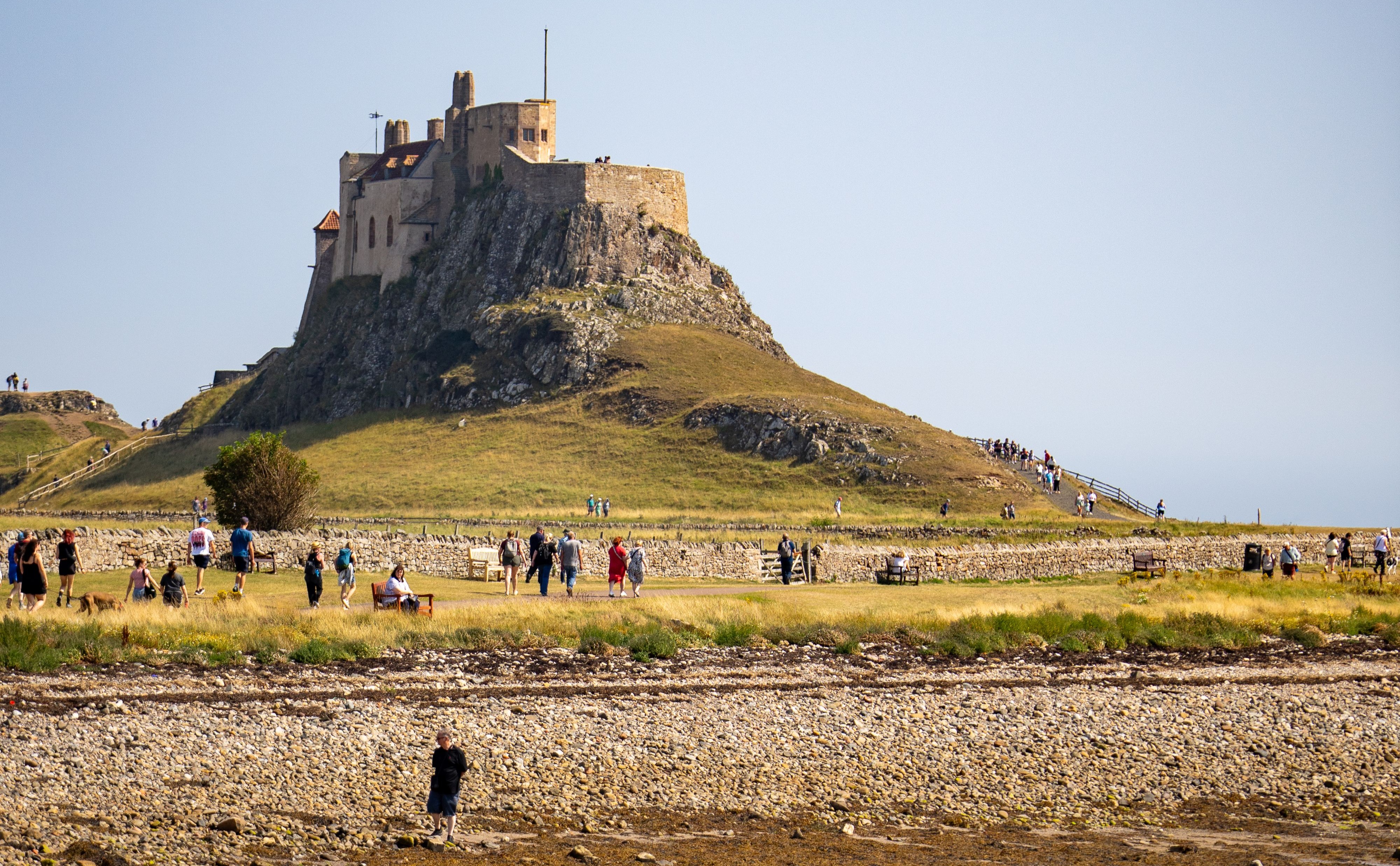
Lindisfarne
Holy Island, Northumberland, United Kingdom8th century
Mystery rating
Lindisfarne, or Holy Island, lies off the coast of Northumberland in England. A road across the sand connects it to the mainland, but the sea covers that road twice a day. In 793 AD Viking raiders attacked the monastery here, an event that shocked Christian Europe and is often used to mark the start of the Viking Age.
Why GeisTrack picked it
Lindisfarne connects a documented historical turning point, the start of the Viking Age, with thirteen centuries of continuous human presence on a landscape the tide still controls twice daily. Few sites combine hard history, surviving medieval art and a genuinely restrictive natural barrier so directly.
Why it's famous
On 8 June 793, Norse raiders attacked the monastery on Lindisfarne, killing monks and taking treasure in an event that sent shock through Christian Europe and that historians now mark as the beginning of the Viking Age. But the island was already significant well before that date. Founded by the Irish monk Aidan in AD 635, it became the center of early Northumbrian Christianity and home to St. Cuthbert, whose supposedly undecayed body made Lindisfarne a major medieval pilgrimage site. Around AD 700, monks here produced the Lindisfarne Gospels, an illuminated Latin manuscript later annotated with the earliest surviving English translation of the Gospels; it now resides in the British Library. The Viking raids eventually drove the monastic community out in 875. A priory was rebuilt in the 12th century and closed under Henry VIII in 1537. In 1901, architect Edwin Lutyens converted a Tudor fort on the island into a private home, with gardens by Gertrude Jekyll, now cared for by the National Trust alongside the priory ruins.
History
Back in AD 635, an Irish monk named Aidan came here from the island of Iona, invited by King Oswald. He started a monastery that became the birthplace of Christianity in Northumbria. Its most famous figure was Cuthbert, who began as a shepherd but became a monk, then a bishop, and finally a hermit. He went to live alone on the Inner Farne island with the seabirds. When his coffin was opened eleven years after his death in 687, people claimed his body had not decayed. This 'miracle' made Lindisfarne one of the most important pilgrimage sites in medieval Europe. Around AD 700, the monks here created the Lindisfarne Gospels. This was a beautifully illustrated Latin manuscript, which later had Old English notes added to it. These notes are the earliest surviving translation of the Gospels into any form of English. Today, you can see this incredible book in the British Library. Sadly, the Viking attack in 793 was just the first of many. In 875, the monastic community finally had to leave, carrying St. Cuthbert's body on a long journey that eventually ended in Durham. Later, a Benedictine priory was re-established here in the 12th century, but it was closed down in 1537 during the reign of King Henry VIII. In 1550, the Tudors built a small fort using stones from the old priory. Much later, in 1901, Edward Hudson, who founded *Country Life* magazine, hired the famous architect Edwin Lutyens to turn the fort into a holiday home. The renowned garden designer Gertrude Jekyll created a beautiful walled garden for it. Today, both the castle and garden are cared for by the National Trust.
The full story
When you plan your visit to Holy Island, you absolutely must start by checking the tide tables. That three-mile causeway connecting it to Beal disappears under the water twice a day. The safe crossing times aren't just suggestions; they're the rules you live by here. Always check them, give yourself extra time, and never, ever try to rush across when the tide is turning. Try to cross early in the day. The island wakes up slowly, and if you arrive before the crowds, you can explore the priory ruins all by yourself. Picture those striking red sandstone arches, including the famous 'rainbow arch' that still stands. Inside the small museum, you'll find ancient carved stones, like the Viking Domesday raider stone. English Heritage looks after the priory, but the nearby parish church of St. Mary is free to enter. Inside, you'll discover a powerful wooden sculpture showing monks carrying St. Cuthbert's coffin. Next, take a walk out to Lindisfarne Castle, which is about a twenty-minute stroll across the fields. On your way, you'll pass old, overturned herring boats now used as sheds. The castle's interior, designed by the famous architect Lutyens, is a charming example of the Arts and Crafts style, full of cozy, inviting spaces. Just beyond it, you'll find a beautiful walled garden, created by Gertrude Jekyll, sitting peacefully in the landscape. Beyond the main buildings, head north. The sand dunes of the nature reserve are home to pretty orchids in the summer. You might even spot grey seals resting on the sands. In winter, thousands of geese and other wading birds arrive from the Arctic, making it a spectacular sight. At low tide, you can still see the Pilgrims' Way, a route marked by poles across the mudflats that some modern pilgrims still walk barefoot. If you can, try to stay overnight. When the tide comes in and the last cars leave, around 160 residents and a few lucky guests have the entire island to themselves. The pubs serve Lindisfarne mead, the priory turns into a dramatic silhouette against the huge Northumbrian sky, and you truly understand why the monk Aidan chose this special place. While you're here, Bamburgh Castle and the puffin colonies on the Farne Islands are just twenty minutes down the coast, making for great day trips.
Legends & sightings
St. Cuthbert is at the center of many stories on the island. For example, those small, round fossils you find on the beaches are called 'St. Cuthbert's beads.' According to local legend, the saint sits on a rock at night, forging these beads on his anvil. Children still love searching for them today! He's also considered the protector of the eider ducks that nest here; locals call them 'cuddy ducks.' Some say his care for these birds might represent the world's earliest bird protection law. The 793 Viking raid also left its own lasting impression. The Anglo-Saxon Chronicle mentions strange sightings, like dragons flying over Northumbria, and violent whirlwinds and lightning just before the attack. Some visitors claim they can still hear monks chanting in the priory ruins as dusk settles. And there are occasional reports of a mysterious figure known as the 'Grey Lady' near the castle path. The causeway itself has a modern legend, and this one is definitely true. Every year, despite all the tide tables posted everywhere, cars get stuck and drivers need to be rescued by helicopter from the special refuge box on stilts. It's a powerful reminder that on Holy Island, the tides still decide when you can arrive and when you must leave.
Fact or legend?
Documented: the monastery was founded in 635 AD, the Lindisfarne Gospels were made here around 700, and the Viking raid of 793 is recorded in the Anglo-Saxon Chronicle. The castle on the rock was built in the 1500s and remodelled in 1901. Legend and belief: stories about Saint Cuthbert's incorrupt body and about the island's holiness belong to religious tradition. Real danger, not folklore: people are rescued from the flooded causeway every year because they ignore the tide tables.
Field notes
- The Viking raid of 8 June 793 on Lindisfarne is conventionally treated as the start of the Viking Age.
- St Aidan founded the monastery in AD 635 after arriving from Iona.
- The Lindisfarne Gospels, made around AD 700, carry the oldest surviving translation of the Gospels into English.
- St Cuthbert's protection of the island's eider ducks is often called the world's first bird protection law.
- The tidal causeway floods twice daily and strands unprepared drivers almost every year.
- Lindisfarne Castle was remodelled by Edwin Lutyens in 1901 with a garden by Gertrude Jekyll.
Our verdict
GeisTrack Verdict
Lindisfarne rewards travellers who plan around the tides rather than fighting them. The priory ruins and castle are modest in scale compared to England's grander abbeys, but the setting does the work: arriving on the first crossing of the day, before the causeway fills with day-trippers, gives you the ruins largely to yourself. Staying overnight, when the tide seals the island off, is the real experience here, not a quick day visit. History enthusiasts and birdwatchers will get the most from it. If you're after ghost stories, the Grey Lady sightings and chanting monks are thin compared to the documented Viking history, which is genuinely the stronger draw.
Editorial assessment based on research, not a sponsored review. See our editorial policy.
Can you visit?
Yes, but only when the tide allows. The causeway is open for a set number of hours each day, published as safe crossing times. Outside those hours the road is under water and closed. The priory ruins and the castle both charge entry and have their own opening hours. The village, beaches and church are free.
How to get there
1. Fly into Newcastle (NCL) or Edinburgh (EDI). 2. Take the East Coast train to Berwick-upon-Tweed. 3. From Berwick, drive or take the seasonal Holy Island bus. Bus times are built around the tides and do not run every day. 4. Cross the causeway only inside the published safe crossing times. A car gives the most freedom, but you must plan your day around the tide.
Before you go
Check the official safe crossing times before you set out, and again before you leave the island. This is the single most important thing. Never drive onto a flooded causeway. Cars are lost every year. Park in the main island car park and walk into the village. Bring wind proof clothing all year. Consider staying overnight to have the island to yourself once the day visitors leave.
Travel tips
Before you leave, always double-check the official safe crossing times and give yourself plenty of extra time. To see the priory ruins without crowds, aim to be on the island with the very first crossing of the day. To truly experience the island cut off from the mainland, try to book an overnight stay. Bring binoculars for wildlife spotting, and consider combining your visit with trips to Bamburgh Castle and a boat tour to the Farne Islands.
Safety
It's extremely important to never cross the causeway outside the published safe times – sadly, vehicles are lost to the tide every single year.
What to expect
A small village, a ruined priory in red sandstone, a castle on a rocky mound and wide empty beaches. It gets busy in the safe crossing window and then empties completely. Allow three to four hours, or stay the night. Birdlife and the walk out to the castle are highlights.
Visit with respect
The parish church is still in use and the island is a place of pilgrimage. Keep quiet inside, and respect the residents who live here all year.
Frequently asked
Plan your trip
Book the practical parts of the journey. We may earn a commission from these partner links, at no extra cost to you.
Plan your visit
Getting to Lindisfarne
Everything you need to turn this mystery into a trip. We may earn a commission from these partner links, at no extra cost to you.
- Best time to visit
- Visit between April and June to enjoy lovely light and birdwatching, or come in winter for a more peaceful, solitary experience.
- Opening hours
- Priory typically 10:00–17:00; island access governed by tides
- Entrance fee
- Priory approx. GBP 9
Continue your GeisTrack
Other places on GeisTrack that pair well with Lindisfarne — same kind of story, or the same corner of the map.
Make it a route
Pair Lindisfarne with Bamburgh Castle, Alnwick and the Northumberland coast.
Sweden
Birka
Birka sits on the island of Björkö in Lake Mälaren, west of Stockholm. Over a thousand years ago it was one of the biggest trading towns in the Viking world. Today it is grass, low mounds and a museum, with more than 3,000 graves under your feet. It is on the UNESCO World Heritage list.
Norway
Norwegian Maritime Museum
The Norwegian Maritime Museum sits on the Bygdøy peninsula in Oslo, surrounded by other polar and ship museums. It tells the story of a country shaped entirely by the sea: fishing, shipwrecks, polar voyages and the boats that made them possible.
United Kingdom
Eilean Mòr
Eilean Mòr is the largest of the Flannan Isles, small rocks in the Atlantic west of Scotland. In December 1900 the three lighthouse keepers vanished. The lamp was clean, the table was set, and two sets of waterproofs were gone. No one has ever found them.
United Kingdom
Bonnybridge
Bonnybridge is an ordinary small town in central Scotland. Since the 1990s it has had a strange reputation: local people report more UFO sightings here than almost anywhere else in Britain. A local councillor collected hundreds of reports and asked the government to investigate. Nothing was ever explained.
Or browse every viking heritage entry, or open the interactive atlas.
Read the story
Long-form journal writing about Lindisfarne.
Rate This Destination
What do you think of this destination? Share your rating with the GeisTrack community.
Community Rating
No ratings yet. Be the first to rate this destination.
Visitor opinion only — separate from the GeisTrack editorial mystery ratings above.
Been here? Share your experience
Have you visited this place? Tell other GeisTrack travelers what it was really like. Your experience may help someone plan their own visit.
No comments yet
No traveler comments yet. Be the first to share your thoughts.