The Temple Built by Hunters — and Buried by Them
GeisTrack Editorial · 31 July 2026 · 7 min read
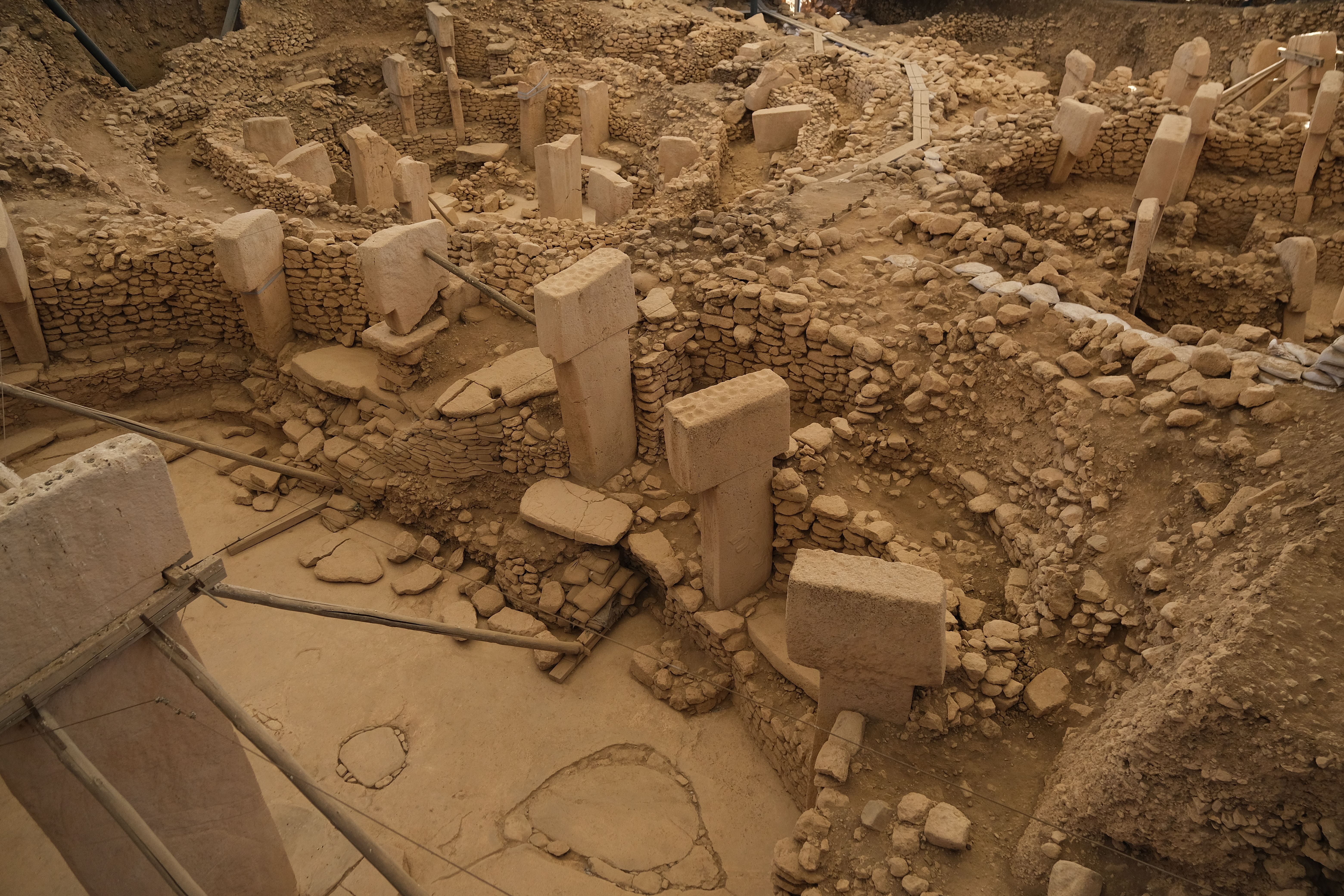
In 1963 a survey team crossed a hill in southeastern Turkey, spotted broken limestone slabs, and dismissed them as a medieval cemetery. They were actually staring at the top of the oldest known temple on Earth.
Perched on a limestone ridge in southeastern Turkey, with views stretching out to the Syrian plain, sits a small hill locals call Potbelly Hill. Back in 1963, a survey team walked across it, noticed some broken limestone slabs, and simply thought it was an old cemetery from the Middle Ages. But thirty years later, a researcher named Klaus Schmidt read their report. He went back, and within minutes, he realized those slabs were actually the tops of something much, much older standing upright beneath the ground.
What they've uncovered since is remarkable: about twenty circular areas, each one surrounded by T-shaped limestone pillars. Some of these pillars are a towering 5.5 meters (about 18 feet) tall and weigh as much as ten tons, with two even larger pillars standing right in the center. These stones are covered in carvings of animals like foxes, wild boars, cranes, scorpions, and snakes. What's even more striking is that some of the pillars have arms bent along their sides and hands meeting over what looks like a belt. This makes the T-shape suddenly appear like a very old, stylized human figure – enormous, without a face, standing in a circle, and all of them gazing inward.
These incredible structures were built around 9500 BC. To put that into perspective, that's roughly 6,000 years before England's Stonehenge and 7,000 years before the famous pyramids of Egypt. The people who built them had no pottery, no metal tools, no way to write, and no wheels. And, as far as the animal bones found there show, they hadn't even started taming animals yet. They were hunter-gatherers, and our history books used to say that hunter-gatherers couldn't organize such massive building projects. Göbekli Tepe forced those textbooks to be rewritten. Instead of agriculture creating extra food that then allowed people to build temples, it might be that the huge effort to gather and feed hundreds of people for monumental construction actually pushed them towards farming. In fact, some of the very first domesticated wheat in the world was found within 30 kilometers (about 18 miles) of this hill.
Then comes the truly mysterious part that no one can fully explain. The builders didn't just abandon these enclosures. They intentionally filled them back in – carefully packing them with rubble, bits of flint, and animal bones, all by hand. They then completely covered everything over. This deliberate burial is why the carvings survive in such amazing condition today, and it's also why we still don't fully understand what they mean.
Today, visiting Göbekli Tepe is a fantastic experience. The entire site is protected by a large canopy, and raised walkways let you explore easily. It's a UNESCO World Heritage site and just a twenty-minute drive from the city of Şanlıurfa. Try to go early or late in the day to avoid the intense midday heat, especially in summer. Afterward – and this part is a must-do – head to the Şanlıurfa Archaeology Museum. There, you'll see a full enclosure reconstructed indoors, and you can marvel at the Urfa Man: the oldest known life-size human statue on Earth, with haunting obsidian eyes.
Şanlıurfa itself is worth at least two nights. You can visit the Balıklıgöl carp pools, wander through the lively bazaar, and enjoy the delicious local food. If you add a trip to Karahan Tepe, a related site that's also now open to visitors nearby, you'll be exploring some of the very earliest and deepest layers of human spiritual life ever discovered.
Plan the trip
Book this journey
We may earn a commission from these partner links, at no extra cost to you.
Visit the place
Practical details, mystery rating and how to plan the trip.