Göbekli Tepe
Şanlıurfa, Southeastern Anatolia, TurkeyNeolithic
Mystery rating
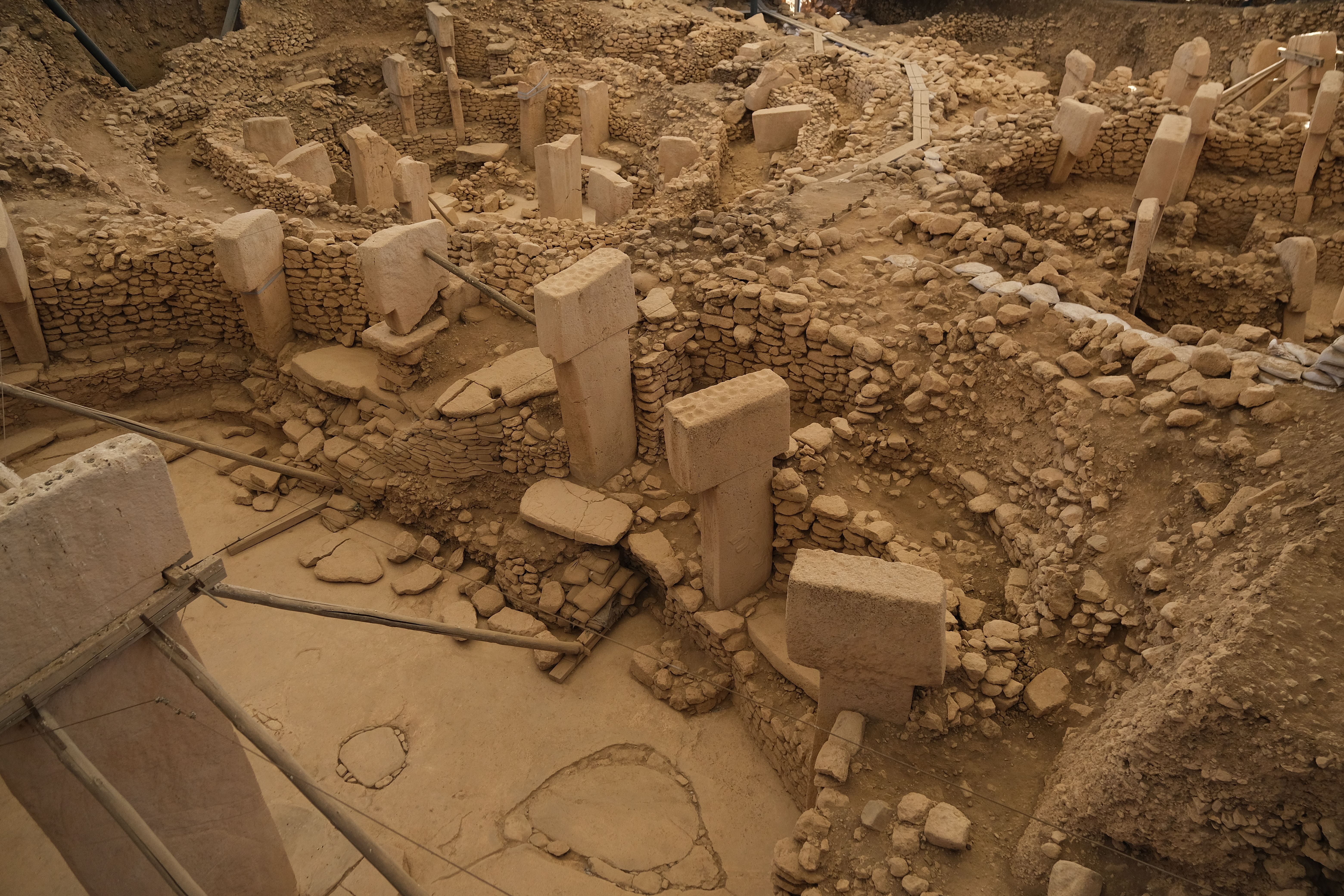
Göbekli Tepe in southeast Turkey is a set of stone circles built around 9500 BC. That makes it thousands of years older than Stonehenge or the pyramids, and older than farming, pottery or writing in this region. Hunter gatherers carved and raised T shaped pillars up to 5.5 metres tall.
Why GeisTrack picked it
This is the oldest known monumental architecture on Earth, built by people without agriculture, pottery or the wheel. It challenges the standard story of how civilization began and raises the possibility that religious gathering, not farming, was the first thing that brought early humans together to build.
Why it's famous
Göbekli Tepe forced archaeologists to rethink the standard sequence of human development. The old model held that farming came first, then villages, then temples. Excavations here, led by Klaus Schmidt from 1994 until his death in 2014, show hunter-gatherers building massive stone enclosures around 9500 to 8000 BC, before agriculture existed anywhere nearby. At least twenty circular enclosures have been located, each ringed by T-shaped pillars around two larger central ones carved with arms, hands and belts, suggesting stylized human figures. Moving ten-ton stones required organized labor and food surpluses, evidenced by piles of animal bones from what look like feasts. Most puzzling, the builders eventually filled these enclosures with rubble and buried them intentionally, which is exactly why the carvings survived. Ground-penetrating radar shows most of the mound remains unexcavated, and nearby Karahan Tepe is revealing a wider Neolithic culture archaeologists call the Taş Tepeler.
History
This ancient mound rests on a limestone ridge, looking out over the Harran plain in southeastern Turkey. Back in 1963, a survey team dismissed the broken pillar tops they found, thinking they were just part of a medieval cemetery. But in 1994, German archaeologist Klaus Schmidt realized what they truly were and started digging. He dedicated himself to this site until he passed away in 2014. So far, at least twenty circular enclosures have been found, though only a few are currently uncovered. Each enclosure features a ring of T-shaped pillars surrounding two larger central pillars. These central pillars often show arms, hands, and belts, suggesting they represent stylized human figures, or perhaps something more profound. Construction of these amazing structures dates back roughly from 9500 to 8000 BC. Two things about Göbekli Tepe still completely amaze experts. First, moving ten-ton pillars would have required hundreds of people to work together, and they would all need to be fed and organized. Evidence like large amounts of feasting leftovers and animal bones suggests exactly that. Second, the builders themselves deliberately filled in these enclosures with rubble. This intentional burial is actually why they survived for so long. Ground-penetrating radar shows that most of the mound is still hidden underground. Other nearby sites, especially Karahan Tepe, are now uncovering a whole lost culture that archaeologists call the Taş Tepeler, or "Stone Hills."
The full story
Your adventure begins in Şanlıurfa, a city that's a fascinating destination on its own. You'll find a bustling market filled with the scent of isot pepper and coffee, the beautiful, still pools of Balıklıgöl where sacred carp swim, and the incredible Şanlıurfa Archaeology Museum. Make sure to visit the museum before you head to the archaeological site itself. It's truly world-class and displays original pillars from Göbekli Tepe, a full-size model of one of its enclosures (Enclosure D), and the famous Urfa Man. This 1.8-meter limestone statue with obsidian eyes is the oldest life-sized human sculpture ever discovered.
Legends & sightings
Şanlıurfa has always been connected to ancient and extraordinary beginnings. Local traditions say this region was the home of Abraham. His birth cave is supposedly in the city below, and according to legend, the fire King Nimrod threw him into turned into the sacred carp pools of Balıklıgöl. Some writers have even gone further, suggesting Göbekli Tepe might be the biblical Garden of Eden, a place where humanity gathered before they began the hard work of agriculture. At the site itself, you'll find even stranger clues. Pillar 43, known as the Vulture Stone, shows a headless man, a scorpion, and birds around some circular shapes. People have offered many different ideas for what it means, from a sky-burial ritual to an ancient record of a comet hitting Earth. Human skulls found at the site have strange cuts and drilled holes, hinting at a skull cult that nobody can fully explain. And then there's the mystery of the burial. For generations, the people who built these impressive rings chose to fill them in and then start building new ones. No one has agreed on a good reason for this ritual. It seems the oldest temple in the world was also intentionally hidden, and we still don't know from whom.
Fact or legend?
Documented: excavation since 1995 has confirmed the age and the carvings of foxes, snakes, boars and birds. It is a UNESCO World Heritage Site. Debated: what it was for. A temple, a meeting place, a feasting site or something else. The old idea that it was buried on purpose is now questioned. Only a small part has been dug. Not supported: claims linking the site to aliens or a lost advanced civilisation. There is no evidence for either.
Field notes
- Construction began around 9500 BC — roughly 6,000 years before Stonehenge and 7,000 before the Great Pyramid.
- The largest T-pillars stand 5.5 metres tall and weigh up to ten tonnes, quarried without metal tools.
- The T-pillars are stylised human figures: several carry carved arms, hands and belts.
- The builders deliberately buried the enclosures with rubble, which is why the carvings survive.
- Geophysical surveys suggest most of the site — perhaps 20 enclosures — is still unexcavated.
- Nearby Karahan Tepe and other Taş Tepeler sites are revealing an entire Neolithic culture around Şanlıurfa.
Our verdict
GeisTrack Verdict
Göbekli Tepe earns its reputation. This isn't a case where the legend outshines the site: the archaeology itself is the draw, and it's substantial enough to justify the trip on its own. Visit the Şanlıurfa Archaeology Museum first, since seeing the Urfa Man and original pillars there makes the open-air site far more meaningful. Go early or late to avoid the heat, and hire a guide, because the enclosures are easy to underappreciate without context. This suits history and archaeology enthusiasts more than casual sightseers; if you don't already find early human history compelling, the walkways and shade structures over a mostly-buried mound may underwhelm you. For the right traveller, though, this is a genuine highlight of southeastern Turkey.
Editorial assessment based on research, not a sponsored review. See our editorial policy.
Can you visit?
Yes. Göbekli Tepe is an open archaeological site with a ticket office, a protective roof and raised walkways. You cannot walk among the pillars, only along the viewing paths, which protect the stones. A guide is not required but helps a lot, because the site does not explain itself.
How to get there
Şanlıurfa is the base. 1. Fly into Şanlıurfa GAP (GNY), usually via Istanbul or Ankara. 2. From Şanlıurfa the site is a short drive northeast, roughly 20 minutes by taxi or tour. 3. Shuttle buses run from the visitor centre car park up to the site. Most visitors take a half day tour from Şanlıurfa, which is simplest.
Before you go
Visit early or late. Summer here is extremely hot and there is little shade. Bring water, a hat and sun cream. Spring and autumn are the most comfortable seasons. Visit the Şanlıurfa Archaeology Museum too. Many of the finds and a full size replica are there. The walkways are mostly flat and easier than at many ruins.
Travel tips
Start your visit at the Şanlıurfa Archaeology Museum. Seeing the Urfa Man and the original pillars there will help you understand the site much better. Arrive at Göbekli Tepe right when it opens or later in the afternoon. The light is beautiful then, and it's much cooler. Hiring a guide is highly recommended. If you have time, also visit Karahan Tepe and, if you have a third day, check out the unique beehive houses in Harran.
Safety
In summer, it gets very hot and there's little natural shade. Remember to bring plenty of water and wear sun protection. The walkways themselves offer minimal shade.
What to expect
You walk from the visitor centre under a large canopy and look down into the excavated enclosures from a wooden walkway. It is quieter and smaller than people expect, and the carvings are the highlight. An hour or so covers the site. The museum in the city fills in the rest of the story.
Visit with respect
This is a fragile 11,000 year old site. Stay on the walkways, do not touch or lean on the stones and do not fly drones without permission.
Frequently asked
Plan your trip
Book the practical parts of the journey. We may earn a commission from these partner links, at no extra cost to you.
Plan your visit
Getting to Göbekli Tepe
Everything you need to turn this mystery into a trip. We may earn a commission from these partner links, at no extra cost to you.
- Best time to visit
- Visit in April–May or September–October. Go early in the morning or late in the afternoon.
- Opening hours
- 08:00–19:00 summer, 08:00–17:00 winter
- Entrance fee
- Approx. TRY 300
Continue your GeisTrack
Other places on GeisTrack that pair well with Göbekli Tepe — same kind of story, or the same corner of the map.
Make it a route
Göbekli Tepe pairs with Şanlıurfa city, its museum and the nearby site of Karahan Tepe.
Ireland
Newgrange
Newgrange in Ireland's Boyne Valley is a huge stone and earth mound built around 3200 BC. That is older than the pyramids at Giza. For a few days around the winter solstice, the rising sun shines through a small opening and lights the passage inside.
United Kingdom
Stonehenge
Stonehenge stands on Salisbury Plain in southern England. Building started around 3000 BC and the big stone circle went up a few hundred years later. Some of the stones were dragged here from Wales, roughly 250 km away. Nobody knows exactly why.
Or browse every ancient mysteries entry, or open the interactive atlas.
Read the story
Long-form journal writing about Göbekli Tepe.
Destination Stories
The Temple Built by Hunters — and Buried by Them
In 1963 a survey team crossed a hill in southeastern Turkey, spotted broken limestone slabs, and dismissed them as a medieval cemetery. They were actually staring at the top of the oldest known temple on Earth.
31 July 2026 · 7 min read
History
Göbekli Tepe and the Rewriting of Prehistory
Six thousand years before Stonehenge, hunter-gatherers who had never farmed a field raised massive carved stone pillars, then deliberately buried them. Göbekli Tepe forces historians to rethink everything they assumed about how civilization began.
6 July 2026 · 10 min read
Rate This Destination
What do you think of this destination? Share your rating with the GeisTrack community.
Community Rating
No ratings yet. Be the first to rate this destination.
Visitor opinion only — separate from the GeisTrack editorial mystery ratings above.
Been here? Share your experience
Have you visited this place? Tell other GeisTrack travelers what it was really like. Your experience may help someone plan their own visit.
No comments yet
No traveler comments yet. Be the first to share your thoughts.