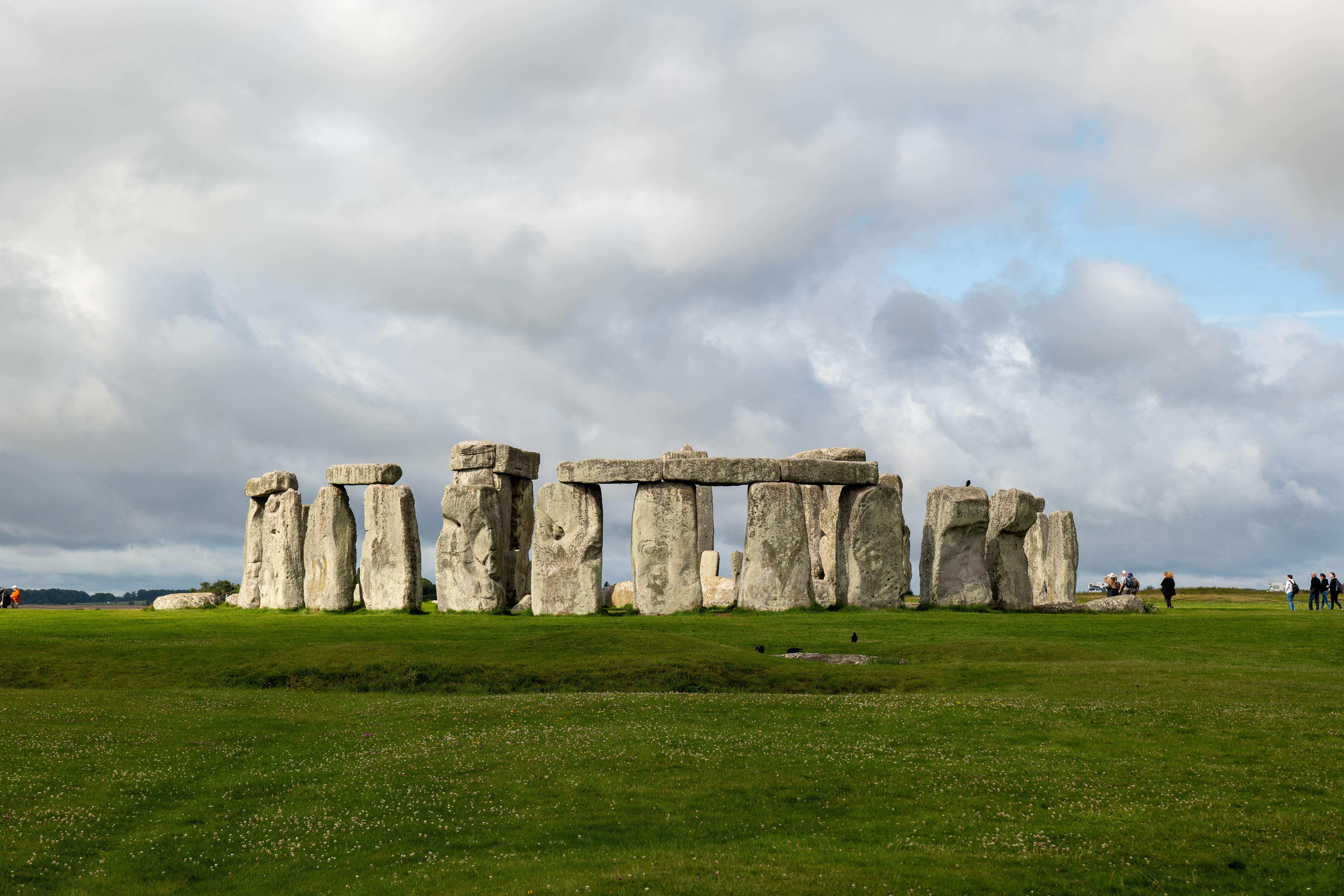
Stonehenge
Amesbury, Wiltshire, England, United KingdomNeolithic
Mystery rating
Stonehenge stands on Salisbury Plain in southern England. Building started around 3000 BC and the big stone circle went up a few hundred years later. Some of the stones were dragged here from Wales, roughly 250 km away. Nobody knows exactly why.
Why GeisTrack picked it
Stonehenge belongs here because the science keeps changing the story. Recent tracing of the Altar Stone to Scotland and evidence of a dismantled Welsh circle show that even a monument this studied still produces genuine surprises, which is rarer than it sounds for a site this famous.
Why it's famous
Stonehenge began around 3000 BC as an earthwork with a ditch, a bank, and 56 pits called Aubrey Holes, used as a cremation cemetery, one of the largest known in Neolithic Britain. The bluestones arrived around 2500 BC after a 250-kilometre journey from Wales, and excavations at Waun Mawn suggest at least part of an existing Welsh stone circle was dismantled and rebuilt at the site. The sarsen stones came later from West Woods near Marlborough, some weighing over 30 tonnes, shaped with woodworking-style joints and raised into the circle and trilithons visitors recognise today. The site connects to Durrington Walls, a nearby settlement where thousands gathered for midwinter feasts, judging by pig bones brought from across Britain. Stonehenge fell out of use around 1600 BC. The idea that Druids built it is a 17th-century mistake that has never fully gone away, even though the monument predates them by well over a thousand years. It became a UNESCO World Heritage Site in 1986.
History
Stonehenge started around 3000 BC as a simple circular earthwork, which included a ditch, a bank, and a ring of 56 pits known as Aubrey Holes. It was used as a cremation cemetery, making it one of the largest ancient burial grounds known in Britain. The famous stones arrived around 2500 BC. First came about 80 "bluestones" from Wales, each weighing up to four tonnes, which were brought an incredible 250 km from the Preseli Hills. Digs at a place called Waun Mawn suggest that at least part of an existing stone circle in Wales was taken apart and rebuilt here. After that, the huge "sarsen" stones arrived, mostly from West Woods near Marlborough, about 25 km north. The largest of these weighs over 30 tonnes. These massive stones were carefully shaped, fitted together using joints like those in woodworking, and then raised to form the outer circle and the five inner structures called trilithons. In later stages, the bluestones were rearranged, and a pathway called the Avenue was added, leading down to the River Avon. Stonehenge also became connected to Durrington Walls, a massive settlement made of timber structures. It seems thousands of people gathered there for midwinter feasts, with pigs brought from all over Britain to be eaten. The monument stopped being used around 1600 BC. In the 17th century, early researchers mistakenly thought the Druids, an ancient Celtic priestly class, had built it. This idea, though wrong, still pops up today. The site was given to the nation in 1918 and became a UNESCO World Heritage Site in 1986.
The full story
Your visit usually begins at the excellent visitor center, located about 2 km from the famous stone circle. Here, you can explore 250 different objects, step into an amazing 360-degree immersive room, and see reconstructed Neolithic houses. These exhibits really help set the scene for what you're about to see. From the visitor center, you can catch a shuttle bus to the monument. But I highly recommend walking across the fields instead. It’s a much better experience! As you follow the old pathway called the Avenue, the stones slowly appear on the horizon, growing larger and larger, just as they were meant to be seen. With a regular ticket, you’ll stay on a circular path a little distance from the stone circle itself. If you want to get closer, you'll need to book a "Stone Circle Experience." English Heritage offers these special tours in small groups, either early in the morning or in the evening, outside normal opening hours. This means you can actually step inside the ring, often with beautiful low light and very few other people around. These tickets sell out months in advance, but they are definitely worth the extra cost. Visiting during the solstices is a completely different experience, and it's free! Thousands of people gather for the midsummer sunrise on June 21st. The midwinter sunset in December is usually smaller and colder, and many experts believe this alignment was actually more important to the people who built Stonehenge. Once you’ve seen Stonehenge, try to think of it as just one part of a much larger ancient landscape. You can actually walk to Durrington Walls, Woodhenge, and the Cursus from the main site. Just 30 minutes north, you'll find Avebury – a much larger stone circle that even has a village inside it, where you can wander among the stones for free. Nearby are Silbury Hill, which is the biggest man-made mound in ancient Europe, and West Kennet Long Barrow, an ancient burial chamber you can explore on your own. To complete your day, you can also visit Old Sarum and Salisbury Cathedral, which houses one of the best-preserved copies of the Magna Carta, a famous historical document. Stonehenge is about 90 minutes from London, making it an easy day trip. However, this ancient landscape really deserves two days to explore properly. Try to go right when it opens or for the last entry slot to avoid crowds. Remember to book your tickets online in advance. And definitely pack clothes for wind – the Salisbury Plain has absolutely no shelter.
Legends & sightings
In the 12th century, a writer named Geoffrey of Monmouth claimed that the wizard Merlin magically brought the stones from Ireland, where giants had carried them from Africa, and rebuilt them as a memorial for slain British nobles. It's a fantastic story, of course, but it’s interesting how accurately it suggests the stones came from far away and required extraordinary effort to move. The Devil also has his own story about Stonehenge. He’s said to have bought the stones from an Irish woman, flown them to Salisbury Plain, and bragged that no one would ever discover how they got there. That is, until a friar dared to answer back, and the Devil supposedly hurled the Heel Stone at him! The idea that Druids built Stonehenge was a 17th-century mistake. However, modern Druid and pagan groups have made the association real in their own way. They gather at the site for the solstices under special managed open access. The midsummer sunrise at the stones is truly one of the most unique and heartwarming scenes you can witness in Britain. The real mystery, though, is much quieter. No one truly knows the exact purpose of Stonehenge. Was it a temple, a calendar, a place of healing, a memorial to ancestors, or a gathering spot for a scattered island population? The evidence we have now actually supports several of these ideas at the same time, but none of them completely explain everything.
Fact or legend?
Documented: the monument was built in stages between about 3000 and 1500 BC. The smaller bluestones come from the Preseli Hills in Wales, which is confirmed by geology. Burials found on site show it was used for the dead. It is a UNESCO World Heritage Site. Debated: the purpose. A burial ground, a calendar aligned to the solstices, a healing place, a meeting site. It may have been several of these over time. Not supported: the old idea that druids built it. Druids came thousands of years later. Modern druid ceremonies here are a recent tradition.
Field notes
- The bluestones were transported roughly 250 km from the Preseli Hills in Wales.
- In 2024 the Altar Stone was traced to north-east Scotland, more than 700 km away.
- The largest sarsens weigh over 30 tonnes and were shaped with mortice-and-tenon joints.
- The circle began around 3000 BC as one of Britain's largest Neolithic cremation cemeteries.
- The axis aligns on both the midsummer sunrise and the midwinter sunset.
- Nearby Durrington Walls hosted huge midwinter feasts, with pigs brought from across Britain.
Our verdict
GeisTrack Verdict
Worth visiting, but plan around the crowds and book ahead. Standard tickets keep you at a distance from the stones, so if getting inside the circle matters to you, book the Stone Circle Experience months in advance, it runs outside normal hours in small groups with far better light. The solstice gatherings are free and genuinely worth attending if timing allows, especially midwinter, which some archaeologists think mattered more to the builders than midsummer. Skip the shuttle bus and walk the Avenue instead for the proper approach. This works best as part of a two-day visit that includes Avebury and Durrington Walls rather than a rushed stop between London obligations.
Editorial assessment based on research, not a sponsored review. See our editorial policy.
Can you visit?
Yes. Stonehenge is managed by English Heritage with a visitor centre, a shuttle bus and a paid timed ticket. The normal route keeps you on a path around the circle, not inside it. Special access tickets to walk among the stones exist in small numbers outside opening hours. Free access inside the circle is allowed at the summer solstice, which is crowded and heavily managed.
How to get there
1. Fly into London Heathrow (LHR) or Bristol (BRS). 2. Take a train to Salisbury. 3. From Salisbury, take the Stonehenge tour bus or a taxi, roughly 20 to 30 minutes. 4. From the visitor centre, ride the shuttle or walk the path to the stones, about 30 minutes on foot across the field. Driving is straightforward and there is parking at the visitor centre, included with a ticket.
Before you go
Book a timed ticket online. Walk up tickets are limited and often unavailable. Dress for wind and rain. The site is completely exposed. The walk from the centre to the stones is pleasant if you have time, and shows the landscape better than the bus. Early or late slots are quieter and the light is better. The path is mostly accessible, and mobility vehicles are available at the centre.
Travel tips
Make sure to book your timed tickets online in advance. If you dream of standing inside the stone circle, book a Stone Circle Experience many months ahead. When you get there, choose to walk to the stones instead of taking the shuttle – it’s a better experience. The Salisbury Plain can be very exposed and windy, so pack layers for any season. And to truly immerse yourself in prehistoric history, add Avebury, Silbury Hill, and West Kennet Long Barrow to your trip.
Safety
The site is on an open chalk plain with very little shelter, so you should bring wind and rain gear year-round.
What to expect
You start in the visitor centre with the exhibition and the reconstructed neolithic houses, then travel to the stones and follow a loop around them at a short distance. It is smaller than some expect and more impressive than photos suggest, mainly because of the empty landscape around it. Two to three hours in total.
Visit with respect
Human remains were buried here and the site is sacred to some people today. Do not touch or climb the stones, and stay on the marked path.
Frequently asked
Plan your trip
Book the practical parts of the journey. We may earn a commission from these partner links, at no extra cost to you.
Plan your visit
Getting to Stonehenge
Everything you need to turn this mystery into a trip. We may earn a commission from these partner links, at no extra cost to you.
- Best time to visit
- Spring (April–June) and early autumn (September–October) are ideal. Or, if you want to experience the special ceremonies, visit during the solstices.
- Opening hours
- Daily, typically 09:30–17:00 (seasonal variation)
- Entrance fee
- Timed ticket required; Stone Circle Experience booked separately
Continue your GeisTrack
Other places on GeisTrack that pair well with Stonehenge — same kind of story, or the same corner of the map.
Make it a route
Make a Wiltshire route: Stonehenge, Avebury stone circle, Silbury Hill and Salisbury Cathedral.
Turkey
Göbekli Tepe
Göbekli Tepe in southeast Turkey is a set of stone circles built around 9500 BC. That makes it thousands of years older than Stonehenge or the pyramids, and older than farming, pottery or writing in this region. Hunter gatherers carved and raised T shaped pillars up to 5.5 metres tall.
Ireland
Newgrange
Newgrange in Ireland's Boyne Valley is a huge stone and earth mound built around 3200 BC. That is older than the pyramids at Giza. For a few days around the winter solstice, the rising sun shines through a small opening and lights the passage inside.
United Kingdom
Eilean Mòr
Eilean Mòr is the largest of the Flannan Isles, small rocks in the Atlantic west of Scotland. In December 1900 the three lighthouse keepers vanished. The lamp was clean, the table was set, and two sets of waterproofs were gone. No one has ever found them.
United Kingdom
Lindisfarne
Lindisfarne, or Holy Island, lies off the coast of Northumberland in England. A road across the sand connects it to the mainland, but the sea covers that road twice a day. In 793 AD Viking raiders attacked the monastery here, an event that shocked Christian Europe and is often used to mark the start of the Viking Age.
Or browse every ancient mysteries entry, or open the interactive atlas.
Read the story
Long-form journal writing about Stonehenge.
Rate This Destination
What do you think of this destination? Share your rating with the GeisTrack community.
Community Rating
No ratings yet. Be the first to rate this destination.
Visitor opinion only — separate from the GeisTrack editorial mystery ratings above.
Been here? Share your experience
Have you visited this place? Tell other GeisTrack travelers what it was really like. Your experience may help someone plan their own visit.
No comments yet
No traveler comments yet. Be the first to share your thoughts.