The Diamond Town the Desert Is Swallowing
GeisTrack Editorial · 31 July 2026 · 6 min read
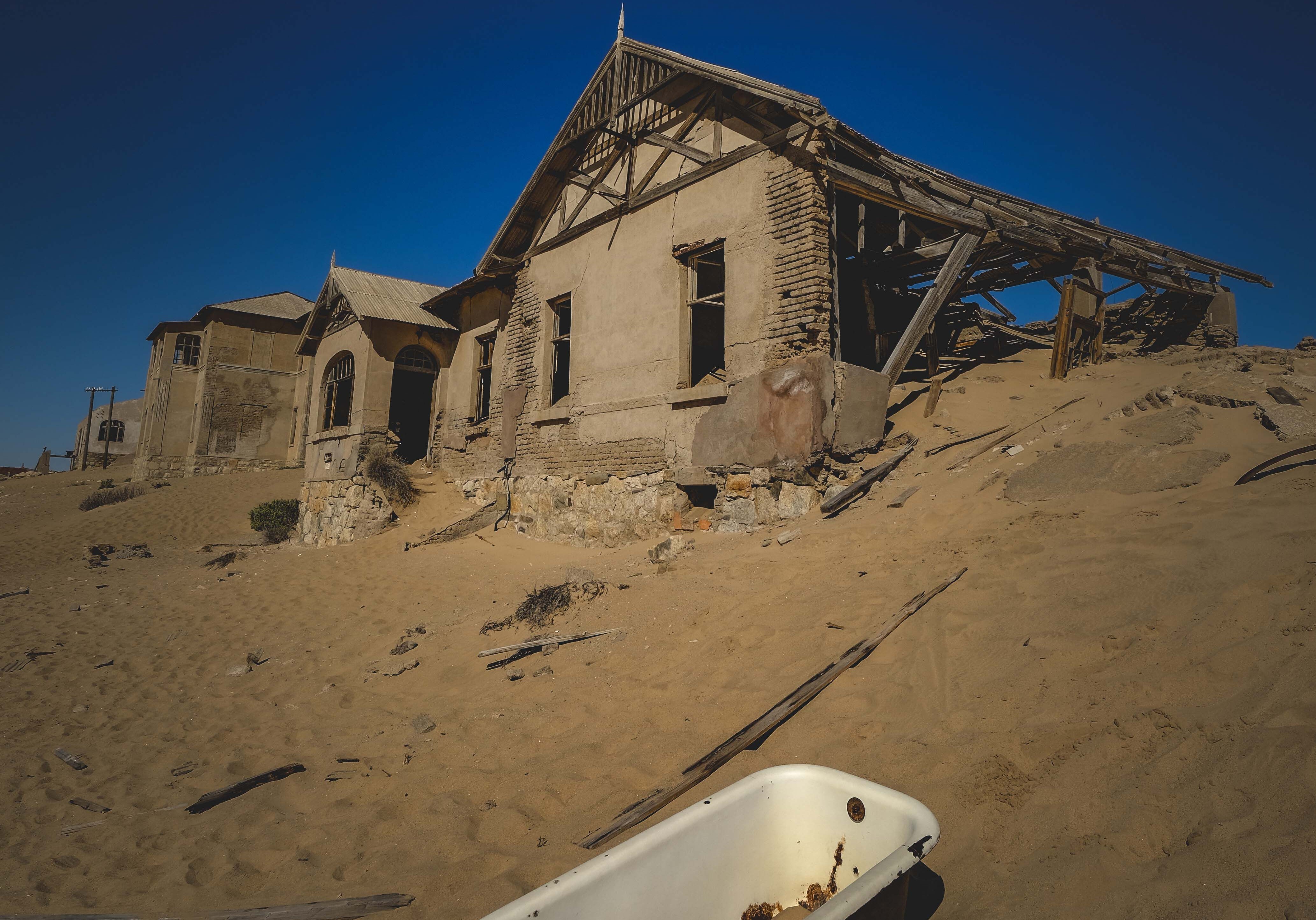
In 1908, a railway worker clearing sand near Lüderitz picked up a shiny stone that turned out to be a diamond. The boomtown that followed had a ballroom and Africa's first X-ray machine — then the desert took it back.
Back in 1908, a railway worker named Zacharias Lewala was clearing sand from the tracks near Lüderitz. He spotted a shiny stone, picked it up, and showed it to his boss, August Stauch. It was a diamond. Soon after, the German colonial government declared the whole area a "Sperrgebiet" — a forbidden zone — to control the diamond rush. Prospectors would then creep through the dunes on moonlit nights, because that's when the diamonds sparkled and were easy to find by hand.
The town they built with all this wealth wasn't just a simple mining camp. It was like a little piece of Bavaria had landed in one of the world's driest deserts. Kolmanskop boasted a ballroom, a theater complete with a stage and orchestra pit, a bowling alley, and even an ice factory that delivered ice blocks to every house daily. There was a saltwater swimming pool, a butcher, a baker, and a hospital that housed the first X-ray machine in the southern part of Africa. (They used it partly to check if workers were hiding diamonds by swallowing them!) The town even had its own tram. Fresh water had to travel by ship and train from a thousand kilometers away. By 1920, nearly a fifth of the world's diamonds came from these very sands.
But this amazing life only lasted for about a generation. People discovered richer, easier diamond deposits down south near the Orange River mouth. Then, diamond prices dropped after the First World War, and by 1956, the last family had packed up and left. The desert immediately began reclaiming its territory.
And that's precisely why photographers travel across continents to see this place today. Sand has poured through windows and doors, filling entire rooms up to the window sills. You might find yourself walking uphill into what used to be a bedroom and then downhill out of a kitchen. Wallpaper hangs in peeling strips above slopes of apricot-colored sand. Peeling paint in mint green, pink, and ochre catches the soft light, and the first and last hour of sunshine in the Namib is truly some of the best light you'll find in all of Africa.
To visit Kolmanskop, it's just ten kilometers from Lüderitz. A standard ticket includes a morning guided tour, which is really excellent — the guides actually grew up there. If you're a serious photographer, make sure to buy a separate sunrise/sunset permit beforehand. This allows you to enter before the main tour groups. Remember to wear closed shoes, and bring a lens cloth and a bag that seals tightly; sand really does get everywhere.
Lüderitz itself is worth staying a night to explore its Art Nouveau German houses. You can also spot the wild desert horses at Garub on the road leading into town. The best time to visit is between April and September, when the wind isn't as strong and the temperatures are more pleasant. Try to give yourself two mornings there instead of just one.
Plan the trip
Book this journey
We may earn a commission from these partner links, at no extra cost to you.
Visit the place
Practical details, mystery rating and how to plan the trip.