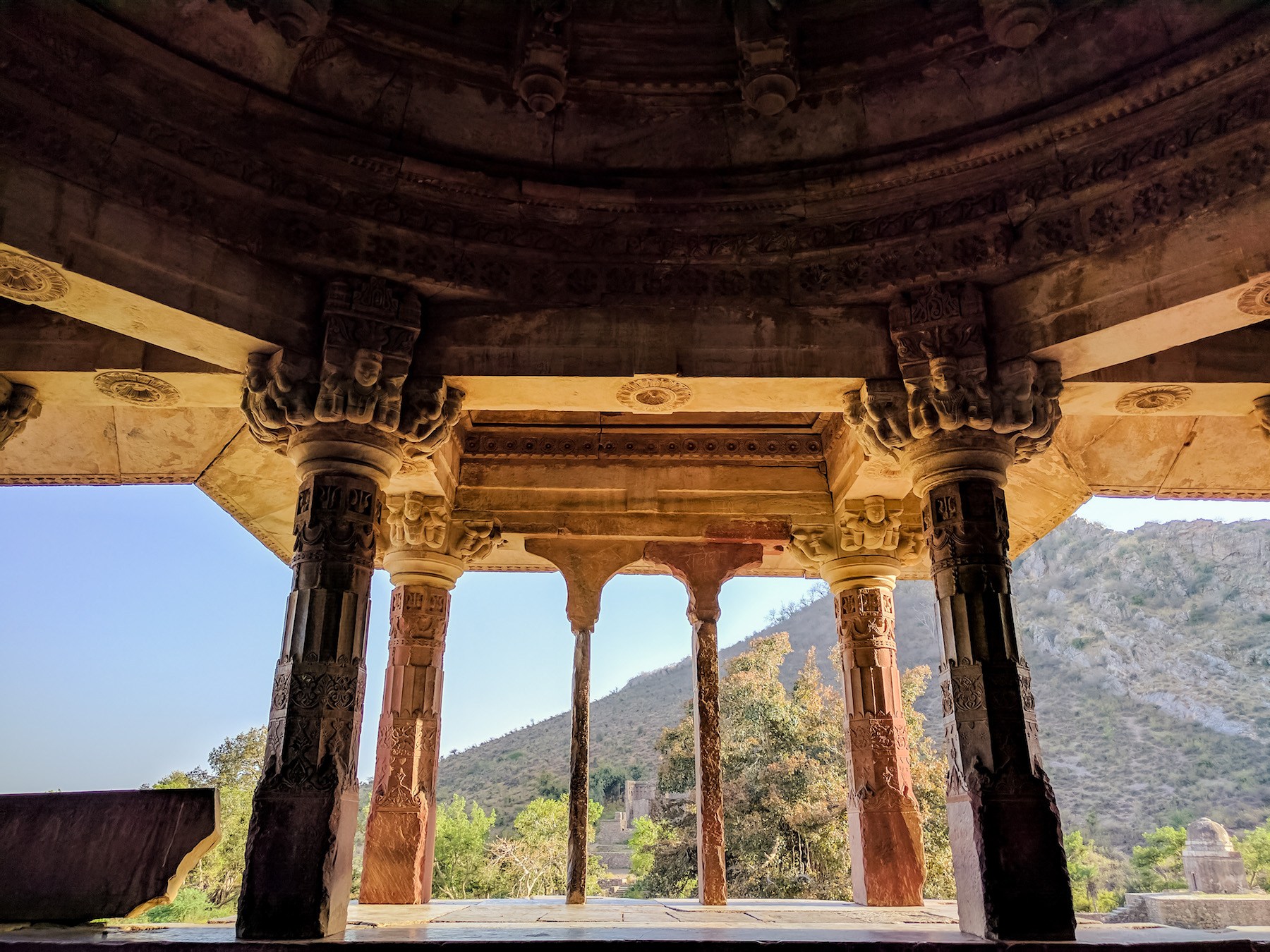
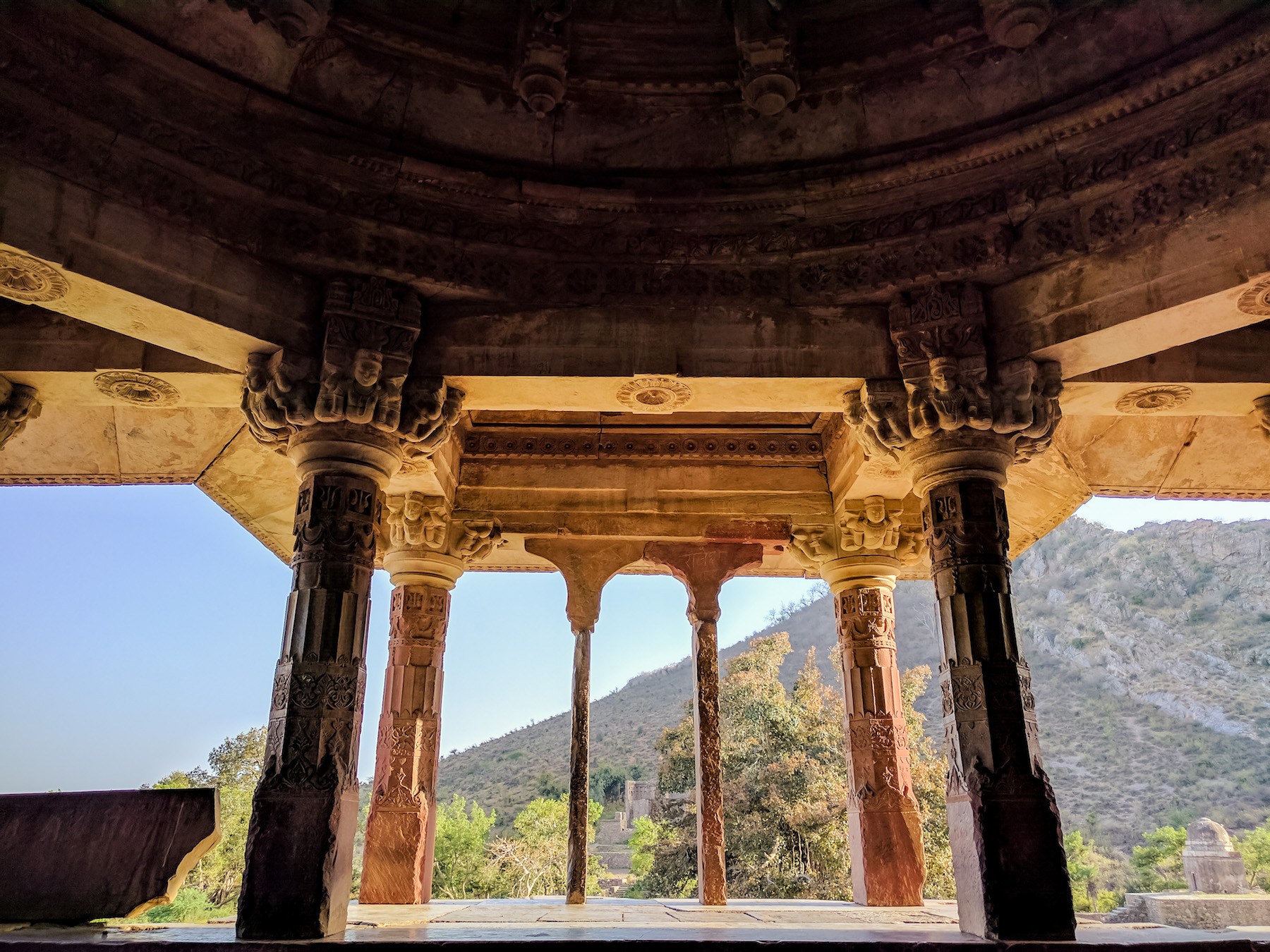
Bhangarh Fort
Bhangarh, Rajasthan, India17th century
Mystery rating
Bhangarh Fort stands in Rajasthan, India, at the edge of a nature reserve. It was a busy town in the 1600s and then it emptied out. India's Archaeological Survey has put up a sign that stops anyone entering between sunset and sunrise, which is why it is often called the most haunted place in India.
Why GeisTrack picked it
Bhangarh earns its place because the legend and the paperwork reinforce each other. Few sites let you stand in a genuinely well-preserved 16th-century town while also following an active government rule built around its reputation for hauntings. That combination of solid archaeology and enforced folklore is rare, and it gives visitors something concrete to react to beyond stories alone.
Why it's famous
Bhangarh's fame rests on one unusual fact: the Archaeological Survey of India posts a sign at the main gate telling visitors not to remain on site between sunset and sunrise. No other protected monument in the country carries that instruction. That sign turned a crumbling Rajput town into the country's most discussed haunted site, and it now pulls in tens of thousands of visitors a year who drive out from Jaipur to see palaces, a market street and temples left standing since the 1700s. What keeps people talking, though, is the pairing of hard fact and folklore. Records show the city was founded in 1573 by Bhagwant Das of Amber and abandoned after a famine in 1783. Local legend adds two curses — one from a spurned sorcerer, one from an ascetic whose meditation spot lost its sunlight — to explain why nobody ever rebuilt on the site. Whichever version visitors believe, the outcome is the same: a Mughal-era townscape preserved almost untouched.
History
Bhangarh was founded in 1573 by Bhagwant Das, the Kachwaha ruler of Amber. He gifted it to his younger son, Madho Singh, who was an important general in Emperor Akbar's army. This wasn't just a fort; it was a carefully planned city. You can still walk along its main street, past the remains of the Jauhari Bazaar, through five gates, and past the Gopinath and Someshwar temples with their intricately carved dome-shaped chhatris. The path leads all the way up to the seven-story palace, which was built right against the hillside. The city's decline was surprisingly quick and remains a bit of a mystery. Later, Madho Singh's descendant, Ajab Singh, moved the capital to a nearby place called Ajabgarh. Then, a terrible famine in 1783 completely emptied out whatever was left of Bhangarh. By the 1800s, the jungle had taken over. What makes these ruins especially haunting is that no one ever rebuilt anything on top of them. Every doorway, water tank, and shop foundation still sits exactly where it was left. This is why archaeologists find it so valuable and why photographers can capture a complete Mughal-era townscape without anyone in the frame.
The full story
Try to arrive right when the gates open. The drive from Jaipur, about 85 kilometers east, takes you through fields of mustard and the dry scrub of Sariska. The first hour after opening is truly the best time to experience Bhangarh. You'll see the golden morning light hitting the ochre stone, langur monkeys crossing what used to be a busy bazaar street, and a gentle mist still clinging to the ravine behind the old palace. Start your exploration by following the main path. You'll pass through five gates, then walk along the market area where you can still count the outlines of merchant shops. After that, you'll reach two temples. The Someshwar temple still hosts prayers, and you can see water collected in its stepwell. From here, the ground gently rises towards the palace. Most of its upper floors have collapsed, but what remains are beautiful arches that perfectly frame the rocky Aravalli mountains. If you scramble just a short distance behind the palace, you'll find a small shrine on the ridge. This spot offers the most incredible view of the entire abandoned city laid out below. Plan for about two to three hours for your visit. Make sure to bring plenty of water; there's almost no shade once you're past the temples. Also, wear sturdy shoes, as the stone pathways are broken and uneven. And a little warning: the monkeys can be quite bold, especially if they see plastic bags that might contain snacks. You'll find local guides waiting at the entrance; they're definitely worth hiring, if only for the fascinating stories they tell. Just be ready to hear at least three different versions of the city's curse before you even finish your tour. And then, make sure you leave before dusk. It's not just about the old stories of sorcerers. The Archaeological Survey of India (ASI) is very serious about their rule, and guards will clear everyone out. Plus, the road back to Jaipur has no lighting at all once it gets dark. This enforced departure is what makes Bhangarh so memorable. It's one of the few places on Earth where the authorities seem to agree that, after nightfall, this ancient ruin truly belongs to something else.
Legends & sightings
There are two main curses that people blame for Bhangarh's fate. In the first story, a sorcerer named Singhia fell in love with Princess Ratnavati. He tried to bewitch her with a bottle of scented oil, but she saw through his trick. She poured the oil onto a large boulder, which then rolled down and crushed him. As he lay dying, he cursed the town, saying it would be destroyed and its people would be reborn again and again, never finding peace. In the second tale, an ascetic (a holy man) named Baba Balnath allowed the city to be built only if no building's shadow ever touched his meditation spot. But when a prince built the palace even taller, its shadow eventually fell upon his retreat. According to this legend, that's when Bhangarh was doomed. Visitors today often report experiencing strange things: the scent of perfume in empty rooms, the faint sound of bangles, or a woman's voice near the stepwell. Many also notice a profound, heavy silence that feels very unusual for an Indian tourist site. Locals will tell you quite directly that people who ignored the sunset rule did not come back as they were before.
Fact or legend?
Documented: the fort was built in the late 16th century, was still inhabited into the 1700s, and was later abandoned. The Archaeological Survey of India really does prohibit entry after dark. Legend: two well known stories explain the ruin, one about a magician who fell in love with the local princess and one about a curse from a holy man. Both are folklore, passed down locally. No proof: there are no records of anything supernatural. The official reason for the night ban is safety in unlit ruins with wild animals nearby.
Field notes
- The Archaeological Survey of India's sunset-to-sunrise ban makes Bhangarh the only monument in India legally closed at night.
- Bhangarh was a planned city with a bazaar street, five gates, temples and a seven-storey palace — not merely a fort.
- It was founded in 1573 by Bhagwant Das of Amber for his son Madho Singh, a general under Emperor Akbar.
- No village was ever rebuilt on the ruins, so the Mughal-era street plan survives almost intact.
- The 1783 Rajasthan famine is the historical explanation for the final abandonment.
- Bhangarh sits on the edge of Sariska Tiger Reserve, so many travellers pair the ruin with a morning safari.
Our verdict
GeisTrack Verdict
Bhangarh works best for travellers who want atmosphere with their history, not scientific proof of anything supernatural. The site itself is a genuinely impressive planned town, and walking its gates, bazaar and temple line is worthwhile on architectural merit alone. The ghost reputation is what gets people in the car from Jaipur, but the ASI sign and the guides' rival curse stories are, honestly, more entertaining than any reported sighting. Expect uneven stone paths, bold monkeys, and almost no shade after the temples, so plan for morning. Go for the ruins and the novelty of a government-enforced curfew; go in with modest expectations about anything paranormal actually happening to you.
Editorial assessment based on research, not a sponsored review. See our editorial policy.
Can you visit?
Yes, in daylight. Bhangarh is a protected monument managed by the Archaeological Survey of India, and you can walk through the ruins freely during opening hours. Entry after sunset is forbidden. People who ignore this can be fined. Do not plan a night visit, whatever you have seen online.
How to get there
Jaipur is the nearest big city with an airport (JAI). 1. Fly or take a train to Jaipur. 2. From Jaipur, hire a car with a driver or take a taxi for the day. 3. The route runs through Rajasthani countryside towards Alwar district. Public transport reaches nearby villages but is slow and awkward with luggage. A day trip by car is the practical option, and Delhi is also a possible starting point.
Before you go
Go early in the morning. The site is hot and there is little shade. Bring water, sun protection and a hat. Wear proper shoes. The ground is uneven and there are steps. Visit between October and March if you can. Summer is very hot. Agree the price and waiting time with your driver before you set off.
Travel tips
Arrive when the site opens to enjoy the beautiful soft light and explore the ruins without crowds. Consider hiring a local guide at the gate; their stories are truly captivating. Make sure to bring at least two liters of water, wear sun protection, and choose closed-toe shoes, as the stone paths are uneven. Keep any snacks hidden from the monkeys, who can be quite aggressive. You might combine your visit with a trip to the nearby Ajabgarh fort or an early morning safari in Sariska. Just remember to start your drive back to Jaipur well before the sun sets.
Safety
Do not try to stay after dark — the rule is strictly enforced by guards. Wear closed shoes because the stone pathways inside the fort are very uneven.
What to expect
You walk in past a row of temples and a market street, then up through the ruined palace with the hills behind it. It is bigger than most people expect and takes an hour or two to see. Monkeys and langurs are common. Weekends bring Indian visitors in large numbers. Everyone leaves before dark, and the gate closes.
Visit with respect
Several temples on the site are still used for worship. Take your shoes off where asked, dress modestly and do not climb on the stonework.
Frequently asked
Plan your trip
Book the practical parts of the journey. We may earn a commission from these partner links, at no extra cost to you.
Plan your visit
Getting to Bhangarh Fort
Everything you need to turn this mystery into a trip. We may earn a commission from these partner links, at no extra cost to you.
- Best time to visit
- From October to March, in the early morning.
- Opening hours
- Sunrise to sunset, daily
- Entrance fee
- Approx. INR 25 for Indian nationals, INR 300 for foreign nationals
Continue your GeisTrack
Other places on GeisTrack that pair well with Bhangarh Fort — same kind of story, or the same corner of the map.
Make it a route
Bhangarh works well as part of a Rajasthan route: Jaipur, then Bhangarh, then Alwar or Sariska for the reserve.
Or browse every castles ruins entry, or open the interactive atlas.
Read the story
Long-form journal writing about Bhangarh Fort.
Rate This Destination
What do you think of this destination? Share your rating with the GeisTrack community.
Community Rating
No ratings yet. Be the first to rate this destination.
Visitor opinion only — separate from the GeisTrack editorial mystery ratings above.
Been here? Share your experience
Have you visited this place? Tell other GeisTrack travelers what it was really like. Your experience may help someone plan their own visit.
No comments yet
No traveler comments yet. Be the first to share your thoughts.