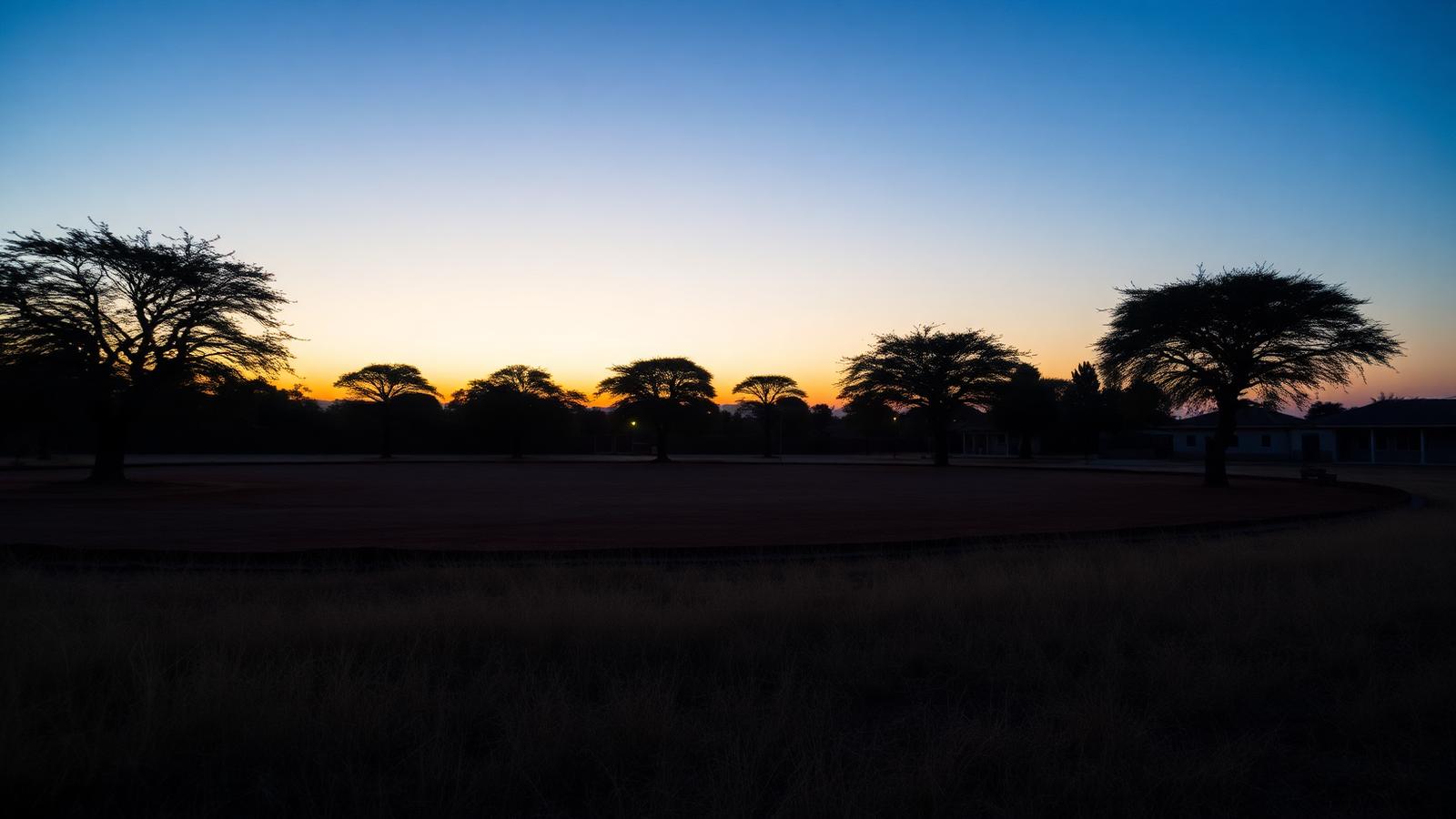
Ariel School, Ruwa
Ruwa, Mashonaland East, Zimbabwe20th century
Mystery rating
On 16 September 1994, around 60 schoolchildren in Ruwa, Zimbabwe, said they saw a silver craft land near their playground during morning break. They said small beings came out. The children were interviewed within days, drew what they saw and mostly told the same story. Nobody has explained it since.
Why GeisTrack picked it
Few UFO reports involve dozens of child witnesses interviewed on camera by a credentialed researcher within weeks of the event. That combination of scale, timing and surviving primary evidence is rare, and it is why researchers still cite this case decades after most 1990s sightings have been forgotten.
Why it's famous
The Ariel School case is famous for its scale and its evidence. Sixty-two children, aged roughly six to twelve, reported seeing a disc-shaped craft and humanoid figures near their school in Ruwa, Zimbabwe, on 16 September 1994. Before the pupils could talk among themselves, the headmaster had them draw what they had seen. Those drawings, remarkably consistent across age groups, still exist. Two weeks later, Harvard psychiatrist John Mack travelled to Zimbabwe and filmed individual and group interviews with the children and their parents. That footage remains the case's core legacy: the children held their story under gentle, sceptical questioning, disagreeing on small details but not on the main event. Sceptics point to a bright meteor seen across the region days earlier and to how quickly stories spread among children. Believers point to the drawings collected before discussion, the number of witnesses, and the fact nobody profited from the claim.
History
On September 16, 1994, 62 students at Ariel School in Ruwa reported seeing a craft land and humanoid figures appear at the edge of their playing field during their morning break. Before the children could discuss it, drawings were collected. Two weeks later, Harvard psychiatrist John Mack interviewed the witnesses on film. Many of these witnesses, now grown-ups, have continued to share consistent accounts for decades.
The full story
It was a normal morning break on September 16, 1994, at a small private primary school in Ruwa, a town about 22 kilometers east of Harare. Suddenly, 62 children, roughly aged six to twelve, reported seeing a strange craft land right at the edge of their playing field. It settled near a patch of thorny bushes, a spot where teachers had always warned them not to go. At the time, all the teachers were in a staff meeting. By the time the adults finally arrived, the children were in a state that many of the teachers later described as unlike anything they had ever witnessed before. Something extraordinary had clearly just happened. What makes the Ariel School incident stand out from nearly every other similar report is how it was handled right from the start. The headmaster had a brilliant idea: he asked each child to draw what they had seen *before* they had a chance to talk about it with each other. These precious drawings still exist today. Looking at them, you can see a consistent picture emerge, despite the variations you’d expect from children of different ages. They all depict the same kind of object – a disc or an oval – on the ground. And they show one or two figures, dressed in tight black clothing, with large, dark eyes and hair-like features. Many children independently described these beings moving slowly, almost as if they were bouncing. Just two weeks later, Dr. John Mack, a Harvard psychiatrist who had won a Pulitzer Prize and was already studying encounter reports, flew to Zimbabwe. He interviewed the children on camera, both individually and in groups, with their parents present. This footage is the true enduring legacy of the case. Dr. Mack’s questions were careful and often a bit doubtful, but the children stood their ground. They corrected him, disagreed with each other on minor points, but always stuck to their main story. Several children even mentioned receiving a message, a warning about the environment and how Earth was being harmed. Some people who doubt the story often point to this message, suggesting it might be the most obvious sign of the children being influenced by ideas they'd heard elsewhere. For those who try to explain away the incident, the argument is simple: children can be easily influenced, one child's story can quickly spread through a group, and a very bright meteor had streaked across the sky just days earlier, making headlines in the region. But the counter-argument is just as straightforward: you have 62 witnesses, drawings collected before any group discussion, no one gained money from this, and the adults involved mostly wished the whole thing had just disappeared. For many years, the school itself preferred not to talk about it at all. Keep in mind, Ariel School is a private property and still operates as a working school today. It's definitely not a tourist attraction and shouldn't be treated as one. The best way to understand this event is by watching the 1994 interview footage, which is available to the public and offers a much more powerful experience than simply visiting the site. Ruwa itself is a town near Harare, easy to reach, and a good stop if you’re traveling east towards Mutare and the beautiful Eastern Highlands – but go for the historical record, not for the playing field.
Legends & sightings
Several children claimed they received a silent warning about pollution and the destruction of Earth. Local stories also connect this event to a bright object seen across southern Africa during the same week.
Fact or legend?
Documented: the event and the interviews are real. Harvard psychiatrist John Mack and local researcher Cynthia Hind spoke to the children days after it happened, and the recordings and drawings still exist. Claims: the children described a craft and small beings, and some said they received a message about harming the Earth. That is what they reported. It is not proof of what was there. Unknown: no physical evidence was found. Sceptics point to group influence among children. Many of the witnesses, now adults, still say the same thing.
Field notes
- Sixty-two children reported the encounter; drawings were collected before the witnesses discussed it with one another.
- Harvard psychiatrist John Mack filmed individual interviews with the children two weeks after the event.
- A widely reported meteor re-entry was seen across southern Africa days before, which sceptics cite as a trigger for the reports.
- Many of the original witnesses, now in their thirties and forties, have repeated the same account in later documentaries.
- Ariel School is a working private school and is not open to visitors.
Our verdict
GeisTrack Verdict
There's genuinely nothing to see in Ruwa. Ariel School is a working private school, and the honest way to experience this story is to watch the 1994 interview footage rather than travel there. That said, the case itself rewards attention: it's one of the rare encounter reports with contemporaneous drawings and filmed testimony instead of decades-old memories. Skeptics and believers can both find solid ground here. For most travellers, Ruwa is worth nothing more than a pass-through stop on the road to the Eastern Highlands. For anyone researching UFO history, though, the archived footage is essential viewing, and it delivers more than any drive-by visit ever could.
Editorial assessment based on research, not a sponsored review. See our editorial policy.
Can you visit?
Ariel School is a working private school, not a tourist site. You cannot walk in. Do not arrive at the gate expecting a tour, and do not photograph pupils. If you want to see the area, look at Ruwa town from public roads and treat the school with the same privacy you would give a school at home.
How to get there
Fly into Harare (HRE), the capital of Zimbabwe. 1. From the airport, take a taxi or arranged transfer into Harare. 2. Ruwa lies east of Harare, a short drive out of the city. 3. A hired car with a driver is the simplest way to get there. Public buses run in the area but are not aimed at visitors.
Before you go
Check your government travel advice for Zimbabwe before booking. Use arranged transport rather than driving yourself if you do not know the roads. Bring cash in small notes. Card payment is not reliable everywhere. Ask before photographing people. Do not contact the school for access unless you have a genuine reason and an invitation.
Travel tips
Instead of trying to visit the school, which is private property, you can learn about this case best by exploring the archived 1994 interview footage and later documentaries. If you're driving east from Harare towards Mutare and the scenic Eastern Highlands, Ruwa is on your route. However, there's nothing to see at the school itself, and the most respectful choice is simply to continue your journey.
Safety
Please do not try to visit or take photos of the school. It's private property, a place where children are educated, and unannounced visitors are not welcome. When traveling in and around Harare, follow standard safety advice: use official transportation and travel between towns during daylight hours.
What to expect
Ruwa is an ordinary Zimbabwean town. There is no museum, no marker and no visitor centre for the 1994 event. What you get is the setting: a normal school in a normal town where something happened that still has no answer. Most people combine the trip with Harare and Zimbabwe's better known sights.
Visit with respect
The witnesses were children and many are still living in the area. Treat their story with respect. Do not turn up looking for interviews, and never approach pupils or staff.
Frequently asked
Plan your trip
Book the practical parts of the journey. We may earn a commission from these partner links, at no extra cost to you.
Plan your visit
Getting to Ariel School, Ruwa
Everything you need to turn this mystery into a trip. We may earn a commission from these partner links, at no extra cost to you.
- Best time to visit
- If you happen to be traveling through the region, the dry season from May to August is the most pleasant time to visit Zimbabwe.
- Opening hours
- Not open to visitors — Ariel School is private property and a functioning school
- Entrance fee
- Not applicable
Continue your GeisTrack
Other places on GeisTrack that pair well with Ariel School, Ruwa — same kind of story, or the same corner of the map.
United States
Roswell
In July 1947 something crashed on a ranch outside Roswell, New Mexico. The local air base first told newspapers it had recovered a flying disc, then said it was a weather balloon. That one day turned a quiet farming town into the centre of UFO culture.
Australia
Wycliffe Well
Wycliffe Well is a roadhouse on the Stuart Highway in Australia's Northern Territory, hundreds of kilometres from anywhere. It calls itself the UFO capital of Australia, and the walls are covered in painted aliens and newspaper cuttings of sighting reports.
Peru
The Nazca Lines
In the desert south of Lima, Peru, huge shapes are drawn into the ground: a hummingbird, a monkey, a spider and hundreds of straight lines. They were made between roughly 500 BC and 500 AD by removing dark stones to show the pale soil underneath. From the ground they are almost invisible. From the air they are enormous.
Or browse every ufo alien sites entry, or open the interactive atlas.
Read the story
Long-form journal writing about Ariel School, Ruwa.
Rate This Destination
What do you think of this destination? Share your rating with the GeisTrack community.
Community Rating
No ratings yet. Be the first to rate this destination.
Visitor opinion only — separate from the GeisTrack editorial mystery ratings above.
Been here? Share your experience
Have you visited this place? Tell other GeisTrack travelers what it was really like. Your experience may help someone plan their own visit.
No comments yet
No traveler comments yet. Be the first to share your thoughts.