Carcassonne
Carcassonne, Occitanie, France12th century
Mystery rating
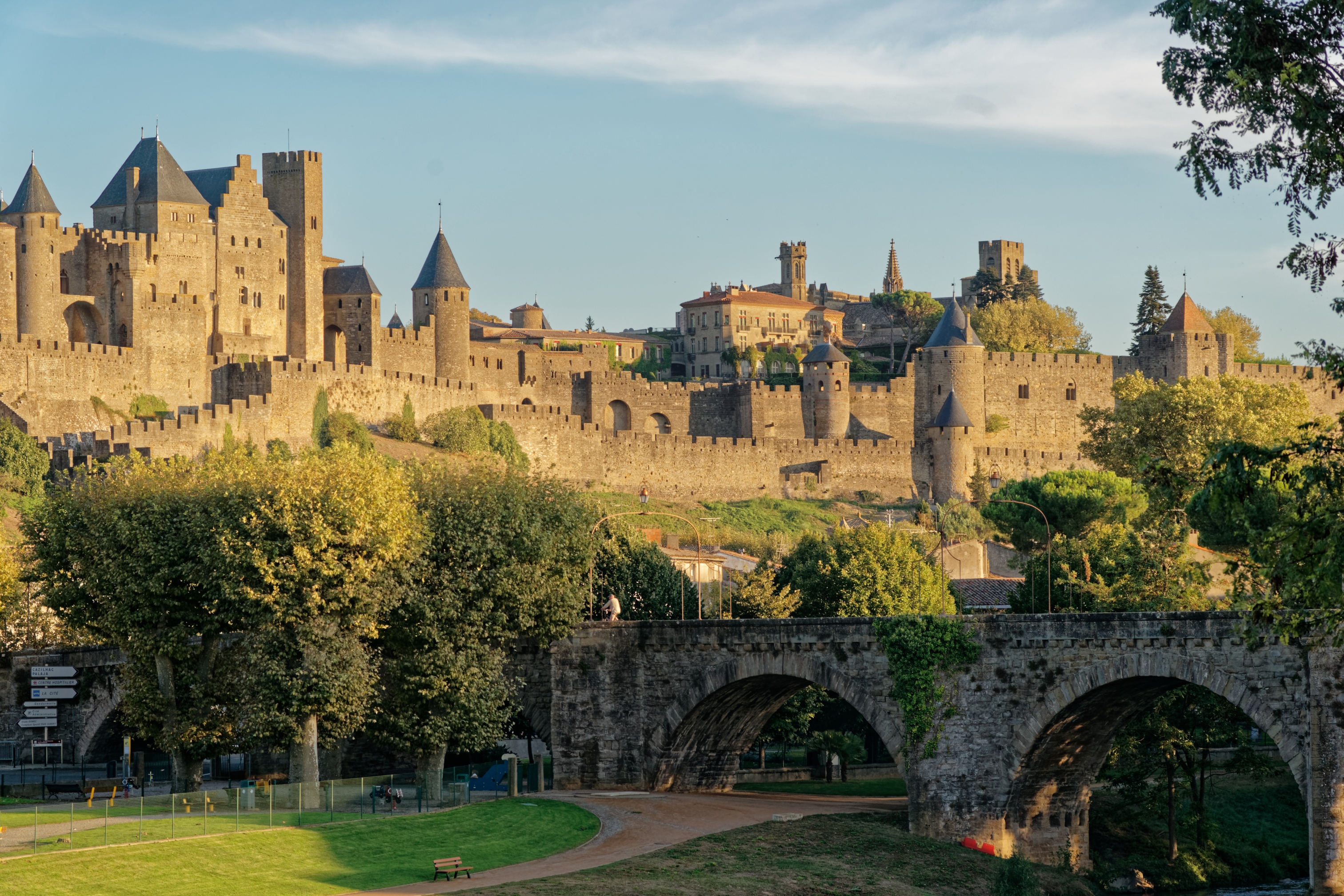
Carcassonne in southern France is a walled medieval city with 52 towers and a double ring of walls. It was almost pulled down in the 1800s and then rebuilt by the architect Viollet-le-Duc, whose pointed roofs are still argued about today. It is a UNESCO World Heritage Site.
Why GeisTrack picked it
Few places let you walk an entire medieval defensive system in one visit, from Roman brickwork to 13th-century barbicans to a 19th-century restoration debate. Add a local legend about a noblewoman and a thrown pig explaining the town's name, and Carcassonne offers both hard history and folklore in equal measure.
Why it's famous
Carcassonne survives as the best example anywhere of how medieval siege defenses actually worked, with its double walls, killing ground between them, and cathedral tucked inside the fortifications. Romans first built on this hill in the 3rd or 4th century AD; you can still spot their brickwork in the inner wall. The city's most dramatic moment came in 1209, when the Albigensian Crusade besieged it to root out the Cathar heresy. Carcassonne fell in two weeks, not through battle but because its wells ran dry in the summer heat. Its young lord died a prisoner at 24. Centuries later, after the border with Aragon shifted and the city lost its military purpose, it slid into decay, and in 1849 the government ordered it demolished. Public protest saved it, and architect Eugène Viollet-le-Duc restored it between 1853 and 1879, adding the pointed slate roofs that now define its skyline, a choice historians still debate as historically inaccurate for the region.
History
People have been building defenses on this hill since the Roman Empire. The Romans first put up walls here in the 3rd or 4th century AD. You can still see long sections of that ancient masonry in the inner wall today, easily recognized by the distinct bands of red brick. Over time, the Visigoths took control, followed briefly by Muslim forces, and then by Frankish counts. The 13th century was a pivotal time for Carcassonne. Its local lords, known as the Trencavels, protected a Christian group called the Cathars. The Church considered the Cathars to be heretics. In 1209, a large army known as the Albigensian Crusade arrived. Carcassonne fell within two weeks, not because of an attack, but because its wells ran dry during a summer siege, causing everyone to suffer from thirst. The young lord, Raymond-Roger Trencavel, died a prisoner in his own dungeon at just 24 years old. Afterward, the French king turned Carcassonne into a key border fortress against the kingdom of Aragon. Between 1240 and 1285, they added the entire outer wall and a complex system of outer defenses called barbicans. However, when the border moved south in 1659, the city lost its military importance and began to fall into disrepair, becoming a slum. In 1849, the government even ordered it to be torn down! But local protests convinced them to bring in an architect named Eugène Viollet-le-Duc. From 1853 to 1879, he led a major restoration, rebuilding the roofs, towers, and battlements. He did a brilliant job, though his choice of pointed roofs, typical of northern France, is still debated by historians today.
The full story
Many visitors miss the true magic of Carcassonne. They arrive midday, walk the main street, perhaps buy a souvenir sword, and then leave. To really experience this place, one of France's greatest sights, you need to do it right. Try to arrive in the evening or, even better, spend the night within its walls. As soon as the daytime crowds leave at dusk, the 'Cité' (the old city) transforms into a peaceful stone village. Only about fifty people live there, and the lamplight on the ramparts creates a truly special atmosphere. Make sure to buy a ticket for the Château Comtal; it's your only way to access the wall walk. This kilometer-long path offers stunning views of nearby vineyards, the distant Pyrenees on a clear day, and the tiled roofs of the lower town across the river. Inside the city walls, don't miss the Basilica of Saints Nazarius and Celsus. Its beautiful stained glass, from the 13th and 14th centuries, is some of the best you'll find in southern France. Afterward, explore the long, grassy 'lists'—the open area between the two main walls. In the early morning, you can often walk this entire circuit almost by yourself. Next, head down to the 'Ville Basse', the lower town that many tourists never bother to visit. Here you'll find the lively market hall and Place Carnot, especially bustling on a Saturday morning. You can also enjoy a hearty cassoulet (a traditional bean and meat stew) at half the price you'd pay in the Cité. Don't forget to stop at the Pont Vieux, an old bridge, about an hour before sunset. It offers that classic, postcard-perfect view of the fortress seemingly floating above the Aude river. If you can stay two nights, you'll have time to explore beyond the city. Visit the Canal du Midi, the impressive Cathar castles of Lastours and Quéribus, and the beautiful Minervois vineyards. Bastille Day (July 14th) is spectacular, with the fortress lit up as if it's on fire, but it gets incredibly crowded. For a more relaxed visit, September offers warm stone, vineyard harvests, and plenty of room to breathe.
Legends & sightings
The city's favorite legend explains how Carcassonne got its name. The story goes that during a long siege by Charlemagne's army, a Saracen noblewoman named Dame Carcas defended the fortress. The garrison was starving, but she fed the very last bit of grain to the last pig and then hurled the pig from the ramparts. The attacking soldiers, thinking that a city rich enough to waste livestock could never be starved out, gave up and left. As they marched away, trumpets sounded from the walls: "Carcas sonne!" which means "Carcas rings out!" A statue believed to represent her still greets visitors at the Porte Narbonnaise. There are also some darker stories from the 13th century, during the time of the Cathars. Guides will show you the walled-up cells beneath the Château Comtal and the Inquisition tower. They'll tell you that on quiet nights, you can hear footsteps in the 'lists' (the grassy area between the two walls) – the footsteps of men who never made it out. Whether you believe in ghosts or not, walking this empty corridor of grass and stone after the day-trippers have left is truly the most atmospheric experience you can have in the Languedoc region.
Fact or legend?
Documented: the hill has been fortified since Roman times. The city was besieged in 1209 during the crusade against the Cathars. In the 19th century Viollet-le-Duc restored it, and he added the cone shaped slate roofs, which are not the original local style. Legend: the story of Dame Carcas, who supposedly tricked besiegers with a well fed pig and gave the city its name, is folklore and not history. So: the walls are real, the restoration is real, and some of the medieval look is a 19th century idea of the Middle Ages.
Field notes
- Carcassonne has 52 towers and roughly three kilometres of double defensive walls.
- Parts of the inner wall are Gallo-Roman, built in the 3rd–4th century AD and identifiable by bands of red brick.
- The city fell in 1209 during the Albigensian Crusade after only two weeks, when its water supply failed.
- In 1849 the French state ordered the fortress demolished; public protest saved it.
- Viollet-le-Duc's 19th-century restoration added the pointed slate roofs, which historians still debate.
- Only about fifty people live permanently inside the medieval walls today.
Our verdict
GeisTrack Verdict
Carcassonne rewards travellers who avoid the midday crush. Day-trippers who walk the main street, buy a toy sword and leave miss the point entirely. Stay a night inside the walls if you can afford it; once the crowds go home at dusk, the Cité becomes a quiet stone village of about fifty residents, and the empty 'lists' between the walls are genuinely atmospheric after dark. Skip the tourist-trap restaurants inside the walls and eat in the lower town instead. This suits history lovers and photographers more than anyone chasing ghost stories, since the darker Cathar-era tales are thin on real evidence. Come in May, June or September if you can.
Editorial assessment based on research, not a sponsored review. See our editorial policy.
Can you visit?
Yes. The walled city is a living town with free public access to its streets, shops and restaurants. You pay only for the Château Comtal and the wall walk, which are managed as a monument with tickets. The lower modern town of Carcassonne is also worth a walk.
How to get there
1. Fly into Carcassonne (CCF), Toulouse (TLS) or Montpellier (MPL). 2. Trains run to Carcassonne station from Toulouse and along the Mediterranean line. 3. From the station it is roughly a half hour walk uphill to the walled city, or a short bus or taxi ride. Driving is simple, but cars are kept out of the old streets, so use the car parks outside the walls.
Before you go
Go early morning or evening. Midday in summer is very crowded and hot. Wear shoes with good grip. The cobbles are uneven and polished smooth. Buy the Château Comtal ticket online in high season. The city is beautiful when floodlit, so consider staying nearby for the evening. Wheelchair access inside the walls is limited by the cobbles and steps.
Travel tips
If you can, try to sleep inside the city walls. The Cité completely transforms after dark. Make sure to buy the Château Comtal ticket to access the rampart walk, and explore the 'lists' circuit before 9 AM. For meals, eat in the lower town instead of the main tourist street. For that classic photo, head to the Pont Vieux an hour before sunset.
Safety
It gets extremely busy from July to August. Be aware that there are many cobblestone streets and steps throughout the city.
What to expect
You cross a bridge, pass through a gate and walk into narrow stone streets full of shops and restaurants. The wall walk gives long views over the vineyards. Expect crowds in the centre and quiet corners just a street away. Half a day is enough for most visitors, a full day if you take the château tour slowly.
Frequently asked
Plan your trip
Book the practical parts of the journey. We may earn a commission from these partner links, at no extra cost to you.
Plan your visit
Getting to Carcassonne
Everything you need to turn this mystery into a trip. We may earn a commission from these partner links, at no extra cost to you.
- Best time to visit
- May, June, and September are ideal; evenings are magical year-round.
- Opening hours
- Château Comtal 10:00–18:30, longer in summer
- Entrance fee
- Cité free; château approx. EUR 13
Continue your GeisTrack
Other places on GeisTrack that pair well with Carcassonne — same kind of story, or the same corner of the map.
Make it a route
Carcassonne pairs well with the Cathar castles of the Aude region and a route east towards the Mediterranean coast.
Germany
Rothenburg ob der Tauber
Rothenburg ob der Tauber is a walled town in Bavaria that still looks medieval, with a complete ring of walls you can walk on. It stopped growing after war and plague in the 1600s, and poverty kept it frozen. Part of it was bombed in 1945 and carefully rebuilt.
France
Château de Brissac
The Château de Brissac in France's Loire Valley is the tallest castle in the country, seven floors high. It has belonged to the same family for over 500 years, and they still live there. It also has France's best known ghost story, the Green Lady.
Or browse every medieval towns entry, or open the interactive atlas.
Read the story
Long-form journal writing about Carcassonne.
Rate This Destination
What do you think of this destination? Share your rating with the GeisTrack community.
Community Rating
No ratings yet. Be the first to rate this destination.
Visitor opinion only — separate from the GeisTrack editorial mystery ratings above.
Been here? Share your experience
Have you visited this place? Tell other GeisTrack travelers what it was really like. Your experience may help someone plan their own visit.
No comments yet
No traveler comments yet. Be the first to share your thoughts.