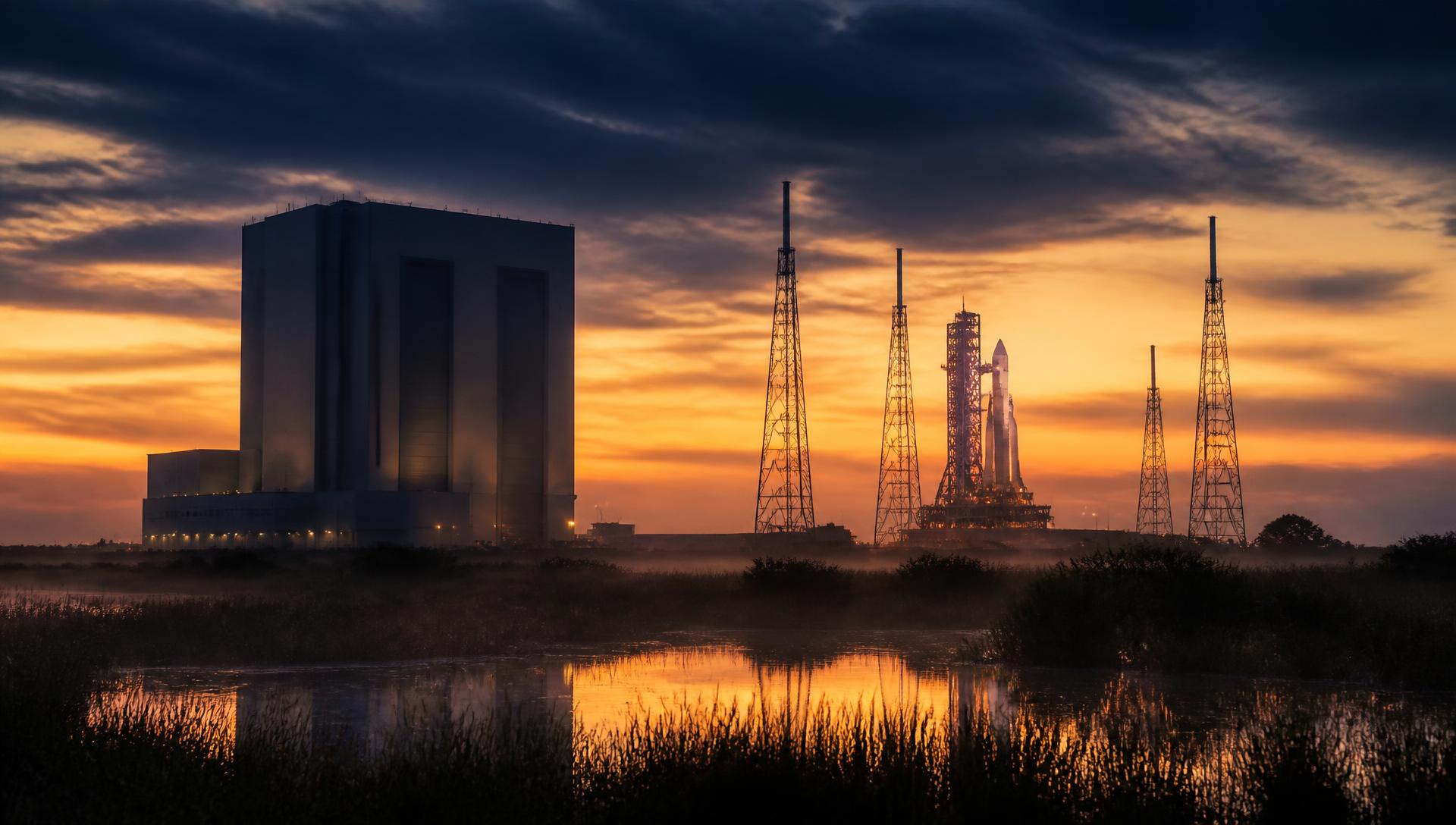
NASA Kennedy Space Center
Merritt Island, Florida, United StatesSpace age (1962–present)
Mystery rating
Kennedy Space Center on Merritt Island, Florida, is where the Apollo Moon missions and the Space Shuttle launched. It is still an active spaceport. The visitor complex sits next to launch pads that are used today, and you can stand under a real Saturn V rocket.
Why GeisTrack picked it
This is one of the few sites where documented, verifiable history is more astonishing than any legend attached to it. Persistent rumors about missing Apollo tapes or staged Moon landings exist, but the real draw is the hardware itself and the fact that active launches still happen from the same pads that made history.
Why it's famous
Every crewed American mission to the Moon launched from this site. Kennedy Space Center is home to Launch Complex 39A and 39B, the Vehicle Assembly Building, one of the largest structures on Earth by volume with doors 139 meters tall that take 45 minutes to open, and the Apollo/Saturn V Center. It's the only place where the full scale of the Apollo program is on physical display rather than in a book or documentary. After Apollo, the same pads launched 135 Space Shuttle missions between 1981 and 2011. Since then the site has become a working commercial spaceport, with SpaceX now regularly launching from Pad 39A, the exact spot that sent Neil Armstrong and Buzz Aldrin to the Moon in 1969. The center also sits inside the Merritt Island National Wildlife Refuge, so alligators, ospreys and manatees share the grounds with active rocket infrastructure.
History
NASA chose Merritt Island in 1962 because it was undeveloped, right on the coast, and far enough from major cities that if something went wrong, it wouldn't harm many people. Within just seven years, this "mosquito coast" had launched Apollo 11 to the Moon. The Vehicle Assembly Building was built in 1966 to vertically stack the massive Saturn V rockets; its enormous doors are 139 meters high and take 45 minutes to open. After the Apollo missions, 135 Space Shuttle launches took place from these same pads, ending in 2011. Since then, the area has found a new life as a commercial spaceport. Today, SpaceX often launches from Pad 39A, the very same spot that sent Neil Armstrong and Buzz Aldrin on their journey.
The full story
Nothing quite prepares you for the sheer size of the Saturn V rocket. It stretches out horizontally inside a special building, all 111 meters of it, piece by piece. As you walk beneath the massive F-1 engine bells, you find yourself looking up into machinery as big as a small house. People often grow quiet here. It's truly one of the few exhibits I know that can make a crowded room of tourists feel a sense of awe. The visitor complex is surprisingly huge, and trying to see it all in a hurry will definitely leave you feeling disappointed. Start your day early at the Rocket Garden. Then, take the bus tour across the causeway. This is where you'll be reminded that Kennedy Space Center is nestled within the Merritt Island National Wildlife Refuge, a fantastic home for alligators, ospreys, and manatees, and one of the best bird habitats in the United States. Try to time your visit to the Apollo/Saturn V Center for late morning. Inside, the firing room is a recreation using the actual consoles from the Apollo 8 launch. They replay the launch countdown in the dark, and it really pulls you in. The Space Shuttle Atlantis is another must-see exhibit. It's displayed nose-up, with its cargo bay wide open, just 20 meters from where you stand. You can still see the scorch marks from its 33 missions. Nearby, the Challenger and Columbia memorial gently holds a piece of Challenger's fuselage and Columbia's cockpit window frames. This display is handled with immense respect and isn't a place you'll want to rush through. Then, there's the main reason some people plan their entire trip around a specific date: a rocket launch. Kennedy Space Center and its neighbor, Cape Canaveral, are launching rockets more frequently than ever before. Special viewing packages can put you close enough to feel the rumble of a Falcon Heavy in your chest. Make sure to check the launch schedule before you book your flights, and always build an extra day into your trip just in case a launch gets postponed. If you can, try to experience a night launch. The moment the launchpad lights up, the swamp around you turns bright as day, and every bird in the refuge takes flight at once. It's then that you truly understand why they built our doorway to space in such a unique location.
Legends & sightings
Space centers, like many unique places, often inspire their own local stories. You might hear persistent tales about "missing" Apollo telemetry tapes, or the "lost two minutes" of radio silence during Apollo 11. There are also the long-standing, though completely disproven, claims that the Moon landings were actually filmed on a sound stage. Beyond these, there are the quieter, more somber stories. The Apollo 1 pad, where three astronauts tragically died in 1967, is now a powerful memorial. And the Challenger and Columbia memorial gallery, which displays recovered debris, is handled with such respect that it often makes visitors pause in quiet reflection.
Fact or legend?
All documented. This is working space history: the Apollo programme, 135 Shuttle flights, and current launches by NASA and commercial companies. Also true: the site shares land with a wildlife refuge, so alligators and eagles live around the launch pads. Conspiracy claims about faked Moon landings are not supported by any evidence. The hardware, the tracking data and the samples are all real and independently verified.
Field notes
- The Vehicle Assembly Building is so large it has its own weather; clouds have formed near the ceiling.
- Launch Complex 39A sent Apollo 11 to the Moon in 1969 and now launches SpaceX Falcon rockets.
- The crawler-transporters that carry rockets to the pad move at 1.6 km/h and burn roughly 300 litres of diesel per kilometre.
- Kennedy Space Center sits inside a national wildlife refuge that is home to more than 300 bird species and a large alligator population.
- Space Shuttle Atlantis flew 33 missions and is displayed at the exact 43.21-degree angle it held in orbit.
Our verdict
GeisTrack Verdict
This is worth a full day, not a rushed afternoon. The Saturn V rocket laid on its side genuinely quiets crowds, and the Apollo/Saturn V Center's countdown recreation, using real Apollo 8 consoles, is one of the better staged moments in any museum. If you can time your trip to a scheduled launch, especially a night launch, do it; watching a rocket light up the swamp is a different experience than any static exhibit. Families, space history buffs and anyone skeptical of Moon-landing conspiracy claims will all find plenty here. Just budget the whole day and check the launch schedule before booking flights, since launches get postponed often.
Editorial assessment based on research, not a sponsored review. See our editorial policy.
Can you visit?
Yes. The Kennedy Space Center Visitor Complex is open to the public almost every day with a paid ticket. Bus tours take you closer to the launch areas. Access changes on launch days and for security, and some areas are never open to the public.
How to get there
1. Fly into Orlando (MCO) or Orlando Melbourne (MLB). 2. Drive east towards Titusville and Merritt Island. It is roughly an hour from Orlando. 3. There is a large paid car park at the visitor complex. There is no useful public transport, so drive or book a shuttle tour from Orlando.
Before you go
Buy tickets online and arrive at opening. A full visit takes a whole day. Check the launch schedule. Watching a launch is extraordinary, but it changes access and crowds. Bring sun protection, water and a rain jacket. Florida storms arrive fast in summer. There is a lot of walking and outdoor waiting. Bag rules and security screening apply.
Travel tips
It's a good idea to buy your tickets online beforehand and try to arrive right when they open. Take the bus tour first, save the Atlantis exhibit for the afternoon, and definitely check the launch schedule before you book your flights. Orlando is about a 45-minute drive away, but Cocoa Beach is closer and much better for staying on launch mornings.
Safety
Florida's heat and sun are intense, so remember to bring water, hats, and sunscreen. You'll go through a security check when you enter. On launch days, traffic can be very heavy, so plan to arrive several hours early.
What to expect
Rockets outdoors, the Space Shuttle Atlantis displayed nose down as if in orbit, the Apollo/Saturn V centre with a complete rocket overhead, and a bus ride past the huge Vehicle Assembly Building. Expect crowds and queues for the main exhibits. Families with children do very well here.
Frequently asked
Plan your trip
Book the practical parts of the journey. We may earn a commission from these partner links, at no extra cost to you.
Plan your visit
Getting to NASA Kennedy Space Center
Everything you need to turn this mystery into a trip. We may earn a commission from these partner links, at no extra cost to you.
- Best time to visit
- The months from November to April offer cooler, drier weather. But honestly, any day with a scheduled rocket launch is the absolute best time to visit.
- Opening hours
- Daily from 09:00; closing times vary seasonally and on launch days.
- Entrance fee
- Paid admission; multi-day and launch viewing packages available.
Continue your GeisTrack
Other places on GeisTrack that pair well with NASA Kennedy Space Center — same kind of story, or the same corner of the map.
Make it a route
Combine it with Cape Canaveral, the Merritt Island wildlife refuge and the Florida Atlantic coast.
Switzerland
CERN & the Large Hadron Collider
CERN sits on the border between Switzerland and France, near Geneva. Under the fields runs a 27 km circular tunnel where scientists smash particles together to find out what the universe is made of. The Higgs boson was confirmed here in 2012.
United States
The Stanley Hotel
The Stanley Hotel opened in 1909 in Estes Park, Colorado, at the entrance to Rocky Mountain National Park. Stephen King stayed one night in 1974, in room 217, and the visit gave him the idea for The Shining. The hotel now runs ghost tours all year.
United States
Roswell
In July 1947 something crashed on a ranch outside Roswell, New Mexico. The local air base first told newspapers it had recovered a flying disc, then said it was a weather balloon. That one day turned a quiet farming town into the centre of UFO culture.
United States
Sedona's Airport Mesa
Airport Mesa is a flat topped ridge above Sedona, Arizona, with red rock views in every direction. It is one of the places local guides call an energy vortex, and it is also one of the best sunset and stargazing spots in the area.
Or browse every science frontiers entry, or open the interactive atlas.
Read the story
Long-form journal writing about NASA Kennedy Space Center.
Rate This Destination
What do you think of this destination? Share your rating with the GeisTrack community.
Community Rating
No ratings yet. Be the first to rate this destination.
Visitor opinion only — separate from the GeisTrack editorial mystery ratings above.
Been here? Share your experience
Have you visited this place? Tell other GeisTrack travelers what it was really like. Your experience may help someone plan their own visit.
No comments yet
No traveler comments yet. Be the first to share your thoughts.