Pripyat
Pripyat, Kyiv Oblast, Ukraine20th century
Mystery rating
Pripyat was built in 1970 for the workers of the Chernobyl nuclear plant. Almost 50,000 people lived there. On 27 April 1986, the day after the reactor explosion, everyone was evacuated in a few hours. They were told it was temporary. Nobody moved back.
Why GeisTrack picked it
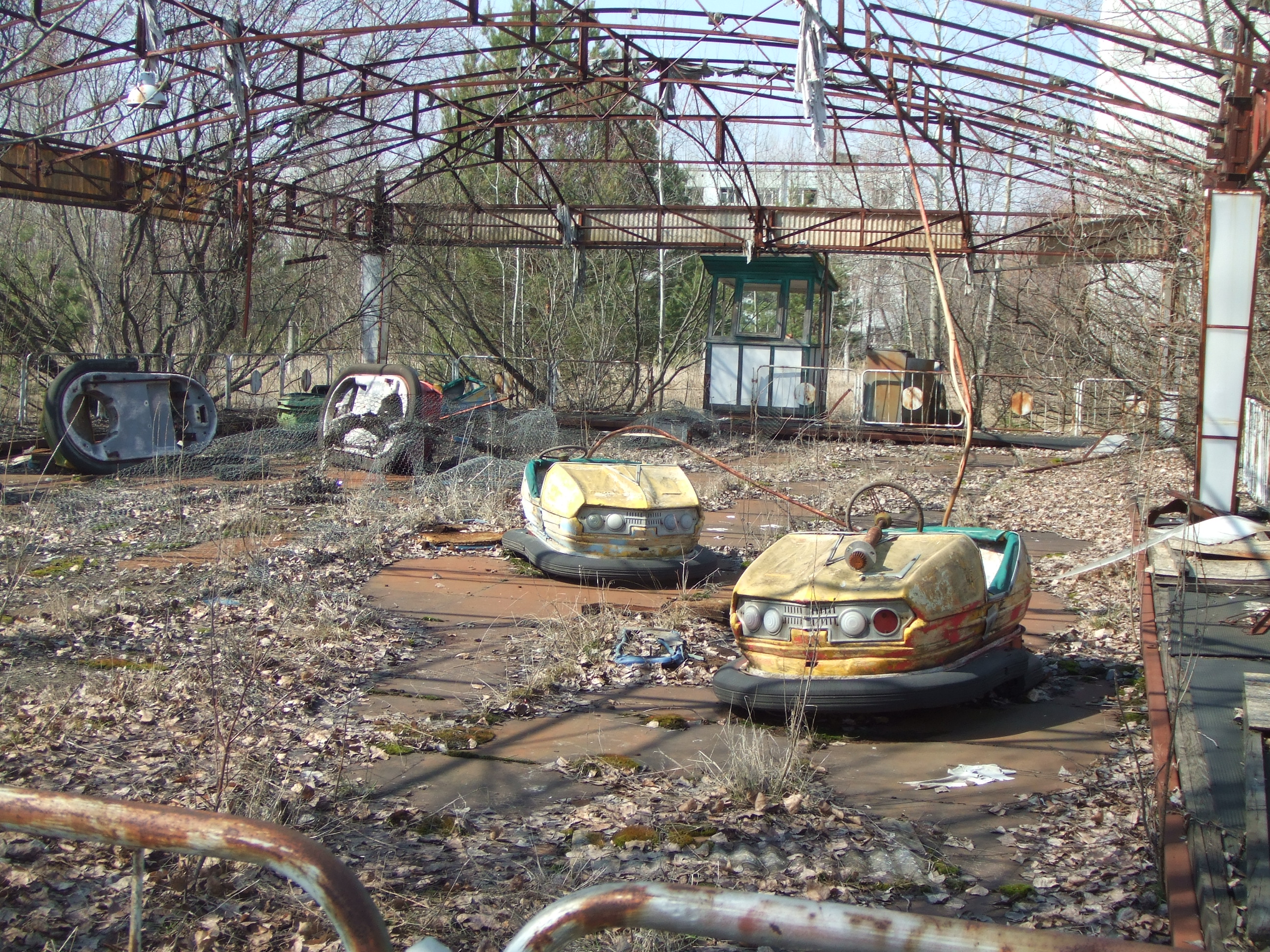
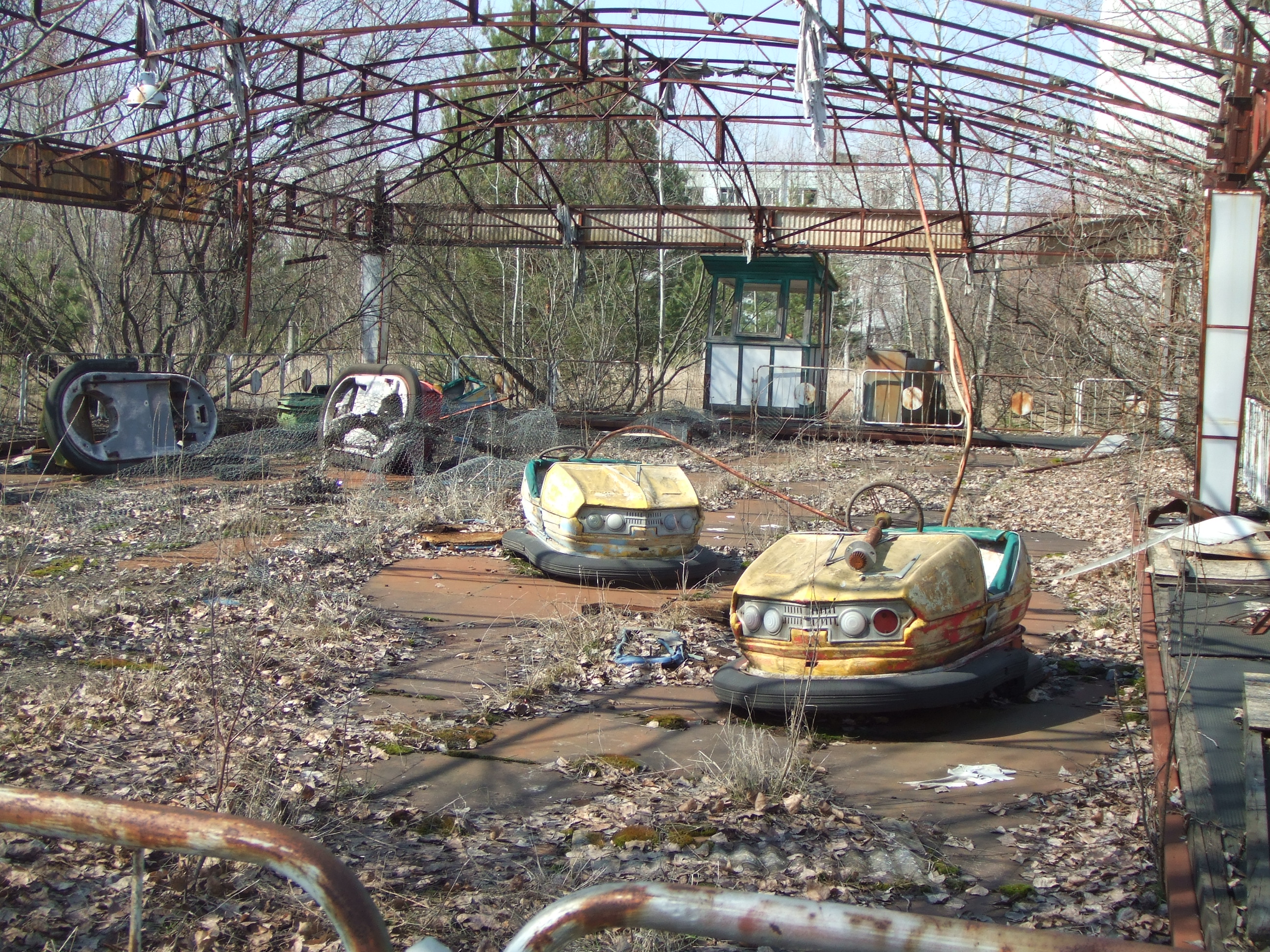
Pripyat is dark tourism's clearest case study: a fully modern city abandoned almost overnight due to catastrophe rather than war or economic collapse, with buildings, schools and a fairground left mid-use. The Exclusion Zone has also become an accidental wildlife refuge, adding an unexpected layer to the story of disaster and recovery.
Why it's famous
Pripyat is the best-known abandoned city of the modern era. Built in 1970 as a model Soviet "atomgrad" for Chernobyl plant workers, it had wide avenues, fifteen kindergartens, a hospital and an amusement park, and residents enjoyed a higher standard of living than most of the Soviet Union. That ended on 26 April 1986, when Reactor Four exploded during a flawed safety test, releasing radioactive material for ten days. Evacuation didn't begin until 2:00pm the next day, 36 hours after the blast; residents were told to pack for three days and never returned. The city's Ferris wheel, due to open on 1 May, was barely used. A 30-kilometre Exclusion Zone was established and remains in force. In 2016, a massive New Safe Confinement arch was installed over the damaged reactor. Since Russia's 2022 invasion, the zone has also become a conflict area, and tourist access has been repeatedly suspended.
History
Pripyat was founded in 1970, designed as a special 'atomgrad'—a city built specifically for nuclear workers—just three kilometers from the Chernobyl plant. It was meant to be a model city, a showcase of Soviet living. It boasted wide avenues, modern art in mosaics, 15 kindergartens, a hospital, a bustling river port, and even an amusement park. People here enjoyed a much higher standard of living than most across the Soviet Union. By 1986, nearly 50,000 people called Pripyat home. Then, on April 26, 1986, at 1:23 AM, Reactor Four exploded during a flawed safety test. The blast ripped off the 1,000-tonne (about 2.2 million pounds) concrete shield covering the core, sending radioactive material high into the atmosphere for ten days. In the immediate aftermath, residents watched the burning reactor from their balconies and from nearby bridges. The next morning, children still went to school, unaware of the danger. The evacuation didn't begin until 2:00 PM on April 27th—a full 36 hours after the explosion. In about three hours, 1,200 buses moved the entire population out. People were told to bring only their documents and a change of clothes, expecting to return in a few days. A 30-kilometer (about 18.6 miles) Exclusion Zone was created around the plant, and it remains in place today. Brave 'liquidators' fought the fires and buried contaminated soil, often at great personal cost to their health. In 2016, a massive New Safe Confinement arch was slid over the damaged reactor. Since 2022, the zone has also become a conflict area due to the war, leading to repeated suspensions of access.
The full story
Let's start with a practical note: as of 2022, the Exclusion Zone is closed to regular visitors because of the war in Ukraine. When it might reopen depends entirely on how safe the area becomes. Always check the latest guidance from the Ukrainian government before you make any plans, and be very cautious of any tour operator promising instant access right now. When tours are allowed, they usually work like this. Groups typically leave Kyiv early in the morning for a two-hour drive to the Dytiatky checkpoint. Here, officials will check your passport against a pre-submitted list. A licensed guide will stay with you throughout your visit, carrying a special device called a dosimeter to measure radiation levels. Your trip often includes sights like the village of Zalissia, which nature is slowly reclaiming, the memorial in Chernobyl town dedicated to the brave 'liquidators' (the first responders), and the viewing point for Reactor Four, right in front of the giant New Safe Confinement arch, before you finally arrive at Pripyat itself. Once in Pripyat, you'll walk along the main street to the central square. You'll see landmarks like the Palace of Culture Energetik, the Prometheus cinema, and the famous amusement park with its Ferris wheel and bumper cars. The city's gymnasium and swimming pool, the school with gas masks scattered on the floor, and the panoramic view from a rooftop that overlooks the entire city—these are the images that truly stick with you. Trees now push through the pavements, and in summer, the dense foliage can hide buildings just fifty meters away. The rules in the zone are strict and must be followed. You can't sit on the ground, touch moss or metal, or eat food outdoors. You must wear long sleeves and closed shoes, and your dosimeter will be checked when you leave. Going inside buildings is officially forbidden, and this rule is enforced more and more as many roofs are starting to collapse. One impressive sight, usually part of the tour, is the Duga radar, and it's something you definitely shouldn't miss. After your visit, a trip back in Kyiv to the National Chernobyl Museum offers a human perspective on the tragedy. Reading the personal stories of survivors, published since 1986, is also an excellent way to prepare for what you will see.
Legends & sightings
The Chernobyl Exclusion Zone is a place where many stories, both factual and folkloric, have emerged. One of the most famous is the tale of the Black Bird of Chernobyl. Several plant workers reportedly saw a huge, dark, winged figure and experienced nightmares in the weeks leading up to the explosion. This story sounds very much like the legend of the Mothman in West Virginia, and it's likely that earlier legend influenced this one. Other stories focus on nature rather than the supernatural. Take the Red Forest, for example—a stand of pine trees that absorbed the heaviest radioactive fallout and turned a coppery red color before dying. This is genuinely one of the most contaminated woodlands on Earth. Yet, paradoxically, the zone has become an unexpected wildlife haven. Wolves, lynx, wild boar, elk, and even a herd of Przewalski's horses (released in 1998) now live and breed freely. It seems that when humans left, the animals returned. Then there's the Duga radar, a colossal 150-meter-tall Soviet 'over-the-horizon' radar hidden in the woods. This massive antenna array, the size of a city block, broadcast a distinctive tapping signal that shortwave radio listeners worldwide nicknamed the "Russian Woodpecker." For years, its purpose was a mystery. It still stands there, an eerie and almost alien presence in the Exclusion Zone. The most persistent myth about Pripyat is that it's deadly to visit. This isn't quite true. While there are dangers, they are specific, well-mapped, and can be managed. That's precisely why guides are so strict about following the rules.
Fact or legend?
Documented: reactor 4 exploded on 26 April 1986 and Pripyat was evacuated the next day. The city is inside the Chernobyl Exclusion Zone. Radiation levels vary a lot from place to place, and some hotspots remain dangerous. Legend and fiction: many stories about mutants, and the layout many visitors imagine, come from games and films rather than the real city. Current access: the war in Ukraine has changed access to the zone completely. Tourist visits that ran for years are not operating normally, and you must check the current official situation before planning anything.
Field notes
- Pripyat had 49,360 residents with an average age of just 26 when it was evacuated.
- The evacuation began 36 hours after the explosion and cleared the city in about three hours using 1,200 buses.
- The famous Ferris wheel was scheduled to open on 1 May 1986, five days after the disaster.
- The 30 km Exclusion Zone has become an unintentional wildlife refuge with wolves, lynx, elk and wild horses.
- The Duga over-the-horizon radar nearby produced the shortwave signal known worldwide as the Russian Woodpecker.
- A 36,000-tonne New Safe Confinement arch was moved over reactor four in 2016.
Our verdict
GeisTrack Verdict
When tours are running, Pripyat delivers on its reputation, but go for the specific, mapped realities rather than any exaggerated danger. Radiation exposure on a standard guided tour is low and closely monitored; the risks are real but manageable, which is exactly why guides enforce strict rules. This suits travellers interested in 20th-century history and disaster response more than casual sightseers looking for scares. Read survivor accounts and visit Kyiv's Chernobyl Museum first, since context makes the empty pool and gas-mask-strewn school far more affecting. As of this writing the zone is closed to tourists because of the war, so check current government guidance before planning anything.
Editorial assessment based on research, not a sponsored review. See our editorial policy.
Can you visit?
Only with official permission, and access has been suspended or heavily restricted since Russia's full scale invasion of Ukraine in 2022. Before that, entry required a licensed tour, a permit and a passport check. Do not attempt to enter the zone illegally. Check current Ukrainian government guidance and your own government's travel advice before making any plan.
How to get there
This information describes how access worked before the war and cannot be relied on now. 1. Kyiv was the base, with flights into Boryspil (KBP). 2. Licensed operators drove groups roughly two hours north to the Dytiatky checkpoint. 3. Permits had to be arranged days in advance with passport details. 4. All movement inside the zone was with a guide. Independent travel was never allowed.
Before you go
Check current travel advice for Ukraine first. Safety, not curiosity, decides this trip. When visits are running, tours require advance permits and identity documents. Long sleeves, long trousers and closed shoes were always required. Eating and drinking outdoors inside the zone was not allowed. Dosimeter checks were carried out on exit.
Travel tips
When the zone is open again, only go with a licensed tour operator and make sure your passport is registered in advance. Wear long sleeves, long trousers, and sturdy shoes that you can easily clean. If you want to check radiation levels yourself, consider bringing your own dosimeter. To truly understand what you're seeing, read some survivor stories and visit Kyiv's Chernobyl Museum beforehand—it will completely change your experience.
Safety
Please note: The Chernobyl Exclusion Zone is currently closed to tourists due to the ongoing security situation in Ukraine. Parts of the area were also mined during the 2022 occupation. Under no circumstances should you attempt to enter the zone on your own.
What to expect
Before the war, visitors saw empty apartment blocks, a school, the swimming pool and the famous unused Ferris wheel, all being taken over by trees. Guides kept groups on cleared routes and out of unsafe buildings. It was a long, quiet day. Whether any of it is possible now depends entirely on the current situation.
Visit with respect
This is a place where people lost their homes and where emergency workers died. Do not stage photos with abandoned belongings, and do not take anything out of the zone.
Frequently asked
Plan your trip
Book the practical parts of the journey. We may earn a commission from these partner links, at no extra cost to you.
Plan your visit
Getting to Pripyat
Everything you need to turn this mystery into a trip. We may earn a commission from these partner links, at no extra cost to you.
- Best time to visit
- When tours are allowed, spring or autumn are generally the best times to visit.
- Opening hours
- Guided access only, subject to current regional restrictions
- Entrance fee
- Tour dependent
Continue your GeisTrack
Other places on GeisTrack that pair well with Pripyat — same kind of story, or the same corner of the map.
USA
Alcatraz Island
Alcatraz is a small rocky island in San Francisco Bay. For 29 years it held some of the most famous prisoners in the United States. The prison closed in 1963 and is now a museum. People come for the history, the view back at the city, and the story of the three men who escaped and were never found.
Poland
Auschwitz-Birkenau Memorial and Museum
Auschwitz-Birkenau in southern Poland was the largest Nazi concentration and extermination camp. More than one million people were murdered here, most of them Jews. The site is now a memorial and museum. It is not a sightseeing stop. It is a place people visit to understand what happened.
Or browse every dark tourism entry, or open the interactive atlas.
Read the story
Long-form journal writing about Pripyat.
Rate This Destination
What do you think of this destination? Share your rating with the GeisTrack community.
Community Rating
No ratings yet. Be the first to rate this destination.
Visitor opinion only — separate from the GeisTrack editorial mystery ratings above.
Been here? Share your experience
Have you visited this place? Tell other GeisTrack travelers what it was really like. Your experience may help someone plan their own visit.
No comments yet
No traveler comments yet. Be the first to share your thoughts.