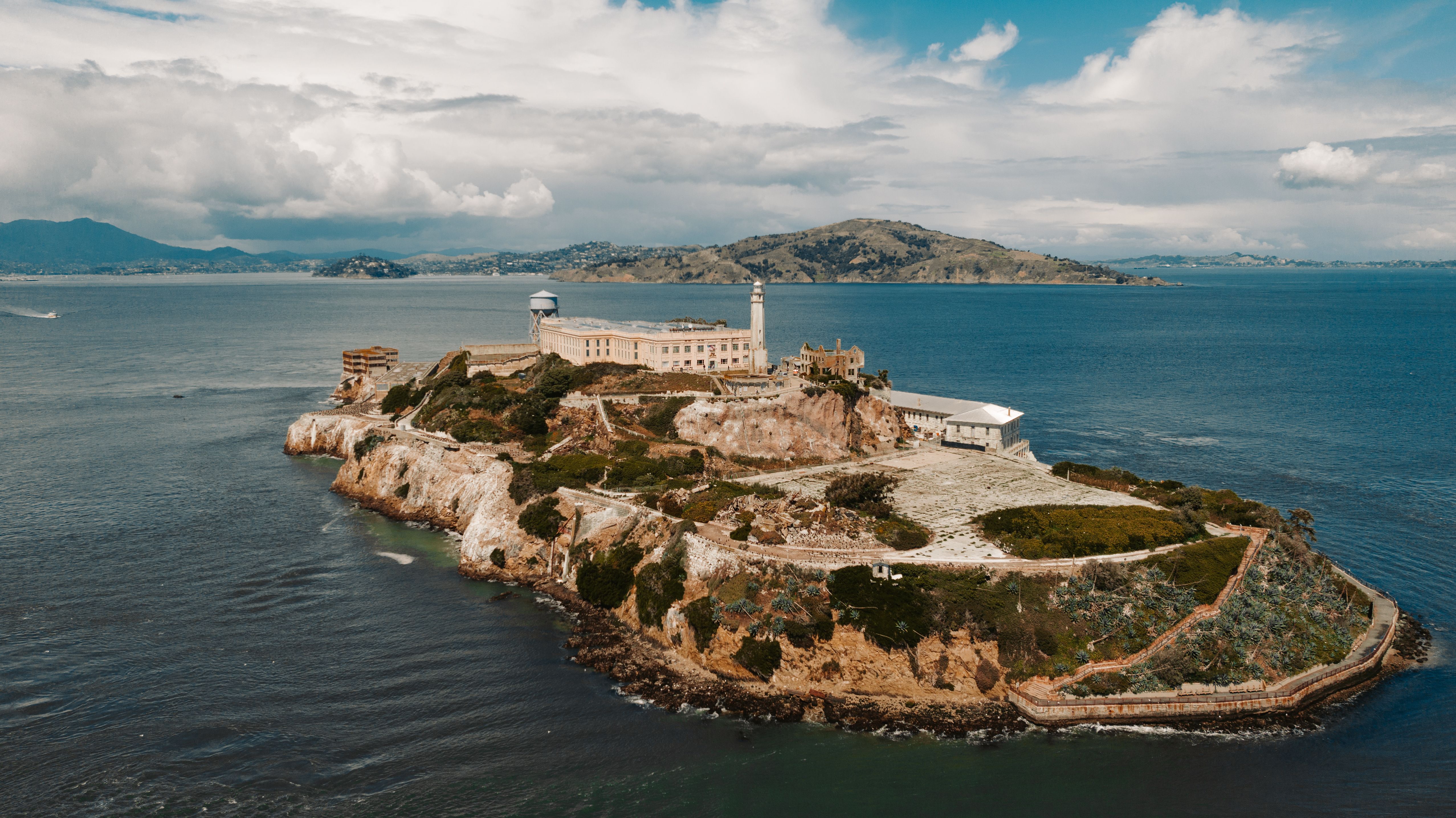
Alcatraz Island
San Francisco, California, USA1934–1963
Mystery rating
Alcatraz is a small rocky island in San Francisco Bay. For 29 years it held some of the most famous prisoners in the United States. The prison closed in 1963 and is now a museum. People come for the history, the view back at the city, and the story of the three men who escaped and were never found.
Why GeisTrack picked it
GeisTrack includes Alcatraz because the documented history is strong enough to stand on its own, without needing embellishment. The isolation cells, the unresolved 1962 escape and the preserved occupation graffiti give visitors something to see and think about, not just hear about, and the National Park Service audio tour is one of the better examples of a historic site explaining itself well.
Why it's famous
Alcatraz became famous as the prison built for inmates no other federal facility could control. Al Capone, Machine Gun Kelly, Robert Stroud and Mickey Cohen all served time there, held by freezing tidal currents just 2 kilometers from the San Francisco waterfront. Over 29 years, 36 men made 14 escape attempts; officially, none succeeded. The exception is the 1962 breakout by Frank Morris and the Anglin brothers, who left papier-mâché heads in their beds and vanished on a raincoat raft. The U.S. Marshals Service still lists the case as open. The island's second act came in 1969, when Native American activists occupied it for 19 months, drawing global attention and helping end a federal policy aimed at dissolving tribal land rights. Between the prison years and the occupation, Alcatraz carries two distinct, well-documented stories rather than one, which is part of why it holds up to repeat visits.
History
The Spanish explorers were the first to name this island "Isla de los Alcatraces," which means "Island of the Pelicans," way back in 1775. In the 1850s, the U.S. Army decided to fortify it to protect the entrance to San Francisco Bay, known as the Golden Gate. They also built the first lighthouse on the Pacific coast of the United States there in 1854. But they quickly realized something even more useful: it was incredibly hard for anyone to leave. So, it became a military prison, holding various people like those who sided with the Confederacy during the Civil War, soldiers who faced court-martial, and even Hopi men in 1895 who were jailed for refusing to send their children to government boarding schools. In 1934, the Federal Bureau of Prisons took over and transformed Alcatraz into a maximum-security penitentiary. This was where they sent the most difficult and rebellious prisoners from other facilities. About 260 inmates lived there at any one time under a very strict set of rules, with only four basic rights: food, clothing, shelter, and medical care. Attorney General Robert Kennedy eventually closed it down in 1963, mainly due to the high cost. The salty air was damaging the concrete, and it cost three times more to run Alcatraz than any prison on the mainland. Then, on November 20, 1969, a group calling themselves "Indians of All Tribes" landed on the island. They claimed it under an old treaty that covered federal land not being used. Their occupation lasted 19 months, captured attention around the world, and played a big role in ending a federal policy that had aimed to break up Native American tribes. Today, the graffiti they left behind is carefully preserved by the National Park Service as an important part of the island's history.
The full story
You'll want to book your tickets really early. Alcatraz City Cruises, which leaves from Pier 33, is the only company allowed to take you to the island. Tickets often sell out weeks ahead, so don't be fooled by other bay cruises that just sail past without stopping. The ferry ride itself only takes about 15 minutes. Once you arrive, a steep road leads up to the main cellhouse, passing the crumbling remains of the warden's house and old barracks. If you need it, there's a shuttle to take you up. Inside the cellhouse, be sure to pick up the "Doing Time" audio tour. It's narrated by former prisoners and guards, and honestly, it's one of the best ways to learn about a place that I've ever come across. The tour guides you along "Broadway" – the main corridor – past recreated dummy heads in the escape cells, into the mess hall where you can still see tear-gas canisters in the ceiling, and down into D Block. Here, you can even step inside an isolation cell and have the door closed behind you. Don't rush back to the dock when you're done. Take some time to walk the Agave Trail and explore the gardens. Volunteers have carefully brought these gardens back to life, using the original plants put there by both inmates and guards' families. And look for the occupation graffiti on the water tower, like "Indians Welcome" and "Peace and Freedom." If your schedule allows, definitely try to take the Night Tour. It's usually less crowded, and the boat actually circles the island, giving you amazing views. Park rangers give special talks in the cellhouse, and seeing the city lights sparkle across the water is truly memorable – it's well worth the extra cost. You should set aside about three hours for the whole trip, from start to finish. Make sure to wear layers of clothing, including a windproof jacket, no matter what time of year you visit, as the island can be quite chilly. Remember, there's nothing to buy on the island except water and coffee. You could easily combine your visit with a trip to the Ferry Building market, watching the sea lions at Pier 39, or a walk or bike ride across the Golden Gate Bridge. September and October are usually San Francisco's clearest and warmest months, making them a fantastic time to go.
Legends & sightings
Cellblock D, which was the isolation unit, is the source of most of the ghost stories from Alcatraz. For example, in the 1940s, an inmate in Cell 14D, nicknamed "the hole," reportedly screamed all night, claiming a creature with glowing eyes was in his cell. Guards found him dead the next morning, and when they did the next count, there was supposedly an extra man in line. Guards' own logbooks and later accounts from staff also describe strange noises like clanging, sobbing, and the sound of a banjo coming from the shower room. Legend says Al Capone would play his banjo there to avoid the main prison yard. The "Birdman" legend is a bit different. Robert Stroud, known as the Birdman of Alcatraz, actually kept and studied birds when he was imprisoned at Leavenworth, not at Alcatraz. He wasn't allowed to have any birds during his time on the island. The 1962 escape remains a truly unsolved mystery. In 2013, the FBI even received a letter claiming to be from John Anglin, one of the escapees. A study by Dutch scientists concluded that a raft launched around 11:30 PM could have made it to Horseshoe Bay. The U.S. Marshals Service still considers the case active today. If you stand on the dock on a clear evening, with the city lights shining close enough to almost touch, you can really understand why they tried to escape – and why the challenging waters of the bay usually proved to be the stronger force.
Fact or legend?
Documented history: Alcatraz was a fort, then a military prison, then a federal prison from 1934 to 1963. In June 1962, three men left their cells through holes they had widened and floated away on a raft made of raincoats. They were never found, and the FBI closed the case in 1979. Claims, not proof: many visitors say they hear voices, footsteps or a banjo in the cell block. There is no evidence that the prison is haunted. Old metal, wind and a lot of people in a stone building make strange sounds.
Field notes
- Alcatraz housed the first lighthouse on the west coast of the United States, lit in 1854.
- Thirty-six men made 14 escape attempts; the 1962 Morris–Anglin escape remains officially unsolved.
- The prison closed in 1963 because it cost roughly three times more to operate than a mainland facility.
- Robert Stroud, the 'Birdman of Alcatraz', was never permitted to keep birds on the island.
- Native American activists occupied the island for 19 months from November 1969, and their graffiti is now protected.
- The award-winning audio tour is narrated by people who actually lived and worked in the cellhouse.
Our verdict
GeisTrack Verdict
Alcatraz earns its reputation on facts, not folklore. The prison closed for practical reasons — salt air was destroying the concrete and it cost three times more to run than a mainland facility — and that kind of detail is more interesting than any ghost story attached to Cellblock D. Ghost claims exist, but they're a minor layer here. For most travellers, the audio tour and the unresolved 1962 escape carry the visit. Expect crowds, book ferry tickets weeks ahead, and bring a jacket regardless of season. Families, history buffs and true-crime readers will get the most out of it; if you want a supernatural thrill, look elsewhere.
Editorial assessment based on research, not a sponsored review. See our editorial policy.
Can you visit?
Yes. Alcatraz is part of Golden Gate National Recreation Area and is open to visitors almost every day. You can only get there with the official ferry, and the ferry ticket includes entry. Tickets often sell out weeks ahead, so book early. You cannot arrive with a private boat or swim to the island.
How to get there
Fly into San Francisco International (SFO) or Oakland (OAK). 1. Get into central San Francisco by BART train, bus or taxi. 2. Make your way to Pier 33 on the Embarcadero. The F-line streetcar stops close by. 3. Check in at the pier before your ferry time. 4. The boat crossing is short, roughly 15 minutes. Driving is possible but parking near the piers is expensive and limited. Public transport is the easier option.
Before you go
Book your ferry ticket online well in advance and bring the confirmation. Dress in layers. The bay is windy and much colder than the city, even in summer. Wear comfortable shoes. The walk from the dock up to the cell house is steep. The free audio tour is very good, so plan time to listen to all of it. There is no restaurant on the island, only water and a small shop, so eat before you go.
Travel tips
Make sure to book your tickets several weeks in advance, and try to get an early-morning or night tour. Take your time with the audio tour and let it unfold at its own pace. Bring a windproof jacket, as the island is often much colder than the city. Before you head back on the ferry, be sure to walk the scenic Agave Trail.
Safety
Please stick to the marked paths and pay attention to the ferry schedule. The ground can be uneven and sometimes slippery. Keep a close eye on children, especially near the cliff edges.
What to expect
You land at the dock and walk uphill to the main cell house. Inside you get an audio guide with the voices of former guards and prisoners. You can look into the cells, see the escape hole, the dining hall and the exercise yard. Most people stay two to three hours. Ferries run back regularly, so you can leave when you want. It is busy in the middle of the day and quieter on the first and last boats.
Visit with respect
Alcatraz is also important to Native American history. In 1969 a group occupied the island for 19 months, and their painted messages are still visible. Read them, do not touch them. This was a real prison where people lived and some died, so keep the noise down inside the cell block.
Frequently asked
Plan your trip
Book the practical parts of the journey. We may earn a commission from these partner links, at no extra cost to you.
Plan your visit
Getting to Alcatraz Island
Everything you need to turn this mystery into a trip. We may earn a commission from these partner links, at no extra cost to you.
- Best time to visit
- The clearest and warmest weather in San Francisco is usually in September and October, making these the best months for a visit.
- Opening hours
- Ferries run from 8:45 to 18:15; evening tours and night tours available seasonally
- Entrance fee
- Day tour from $45; night tour from $56
Continue your GeisTrack
Other places on GeisTrack that pair well with Alcatraz Island — same kind of story, or the same corner of the map.
Make it a route
San Francisco makes a good base for a two or three day loop: Alcatraz, then the city waterfront, then a drive north over the Golden Gate Bridge.
Ukraine
Pripyat
Pripyat was built in 1970 for the workers of the Chernobyl nuclear plant. Almost 50,000 people lived there. On 27 April 1986, the day after the reactor explosion, everyone was evacuated in a few hours. They were told it was temporary. Nobody moved back.
Poland
Auschwitz-Birkenau Memorial and Museum
Auschwitz-Birkenau in southern Poland was the largest Nazi concentration and extermination camp. More than one million people were murdered here, most of them Jews. The site is now a memorial and museum. It is not a sightseeing stop. It is a place people visit to understand what happened.
USA
Bus 142 — The Into the Wild Magic Bus
Bus 142 is the abandoned bus where Christopher McCandless died in Alaska in 1992, made famous by the book and film Into the Wild. So many people got into trouble trying to reach it that the bus was airlifted out in 2020. It is now on display in Fairbanks, and the original site is empty.
Or browse every dark tourism entry, or open the interactive atlas.
Read the story
Long-form journal writing about Alcatraz Island.
Rate This Destination
What do you think of this destination? Share your rating with the GeisTrack community.
Community Rating
No ratings yet. Be the first to rate this destination.
Visitor opinion only — separate from the GeisTrack editorial mystery ratings above.
Been here? Share your experience
Have you visited this place? Tell other GeisTrack travelers what it was really like. Your experience may help someone plan their own visit.
No comments yet
No traveler comments yet. Be the first to share your thoughts.